
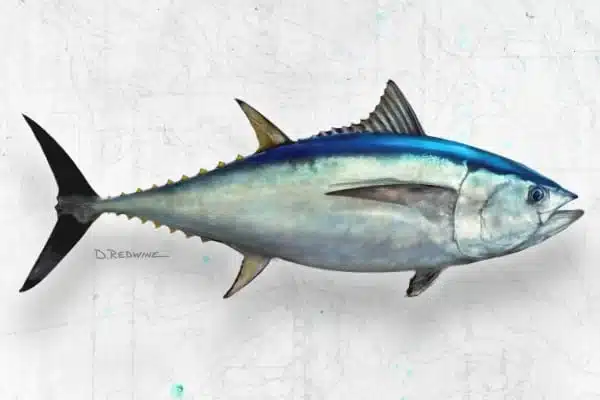
Thunnus thynnus
Family:
Scombridae
Other Common Names:
BFT, Giants
Description
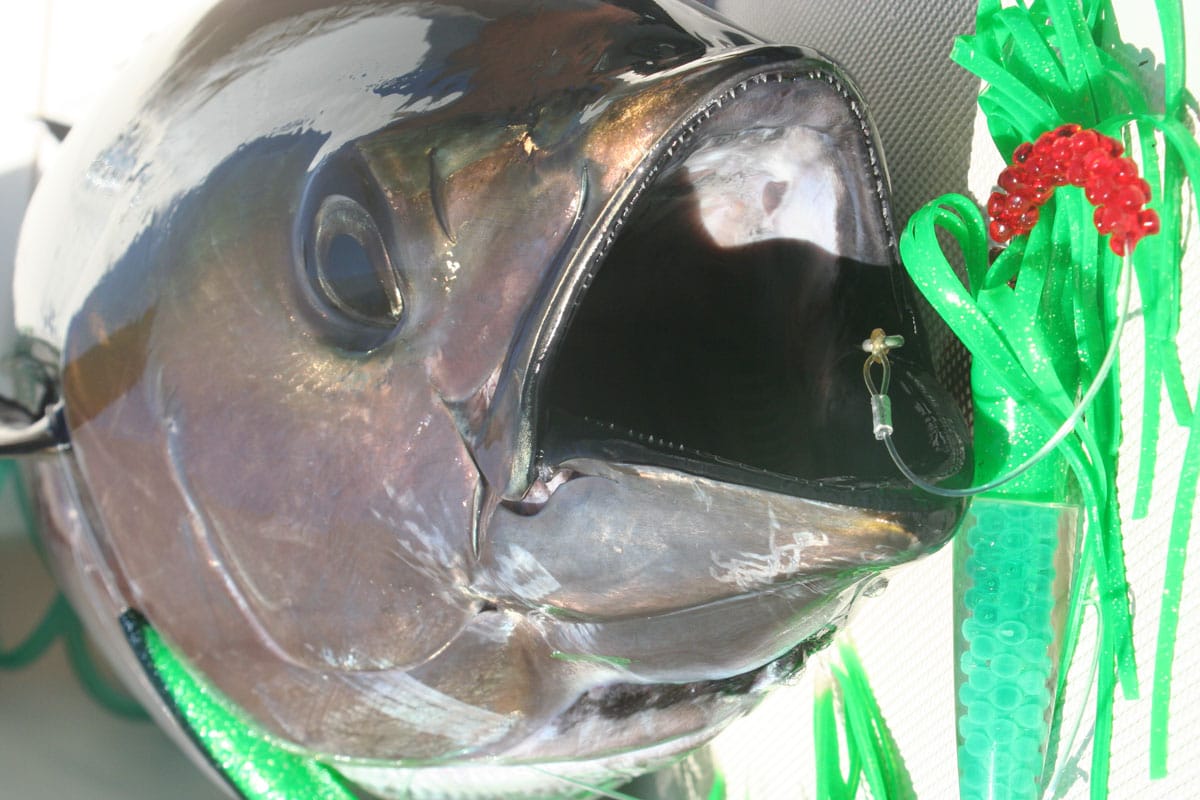
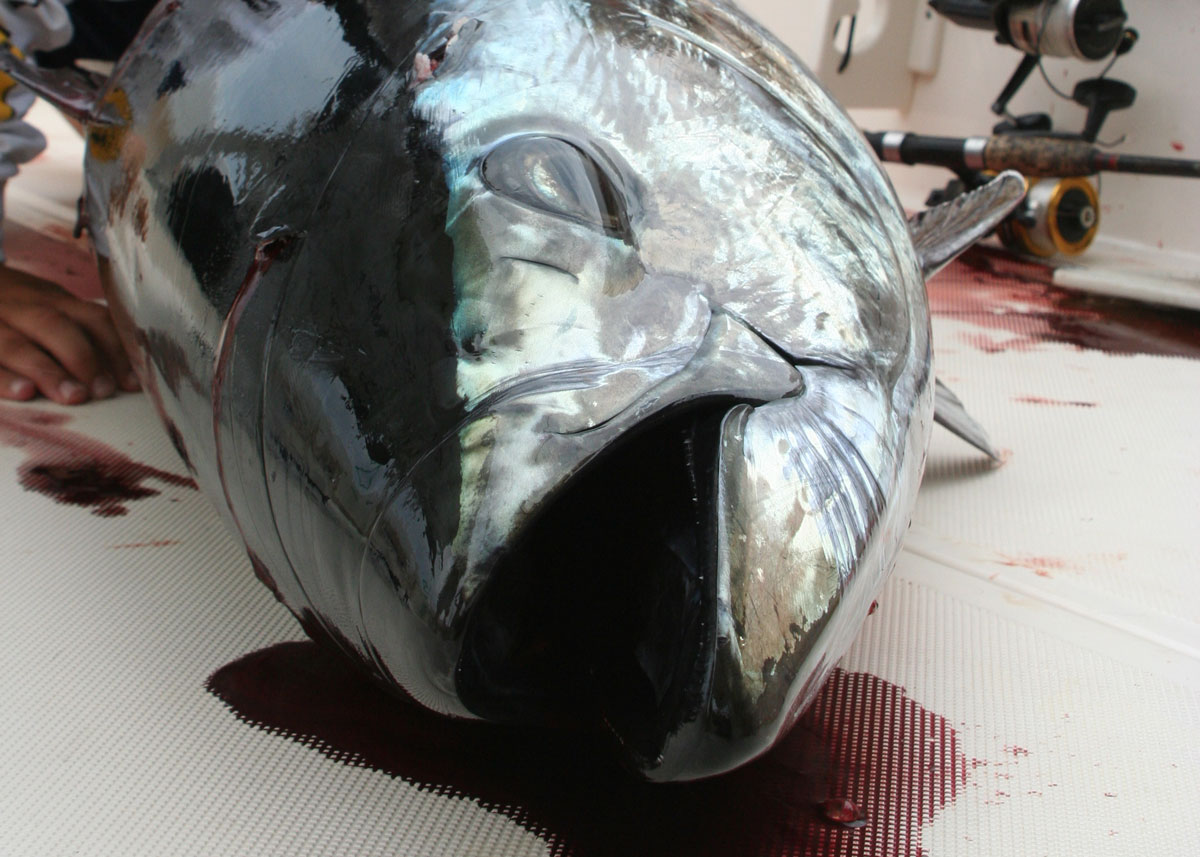
Atlantic Bluefin tuna have a dark back over a silver body with a yellowish dorsal fin and finlets. Bluefin tuna have fairly short pectoral fins relative to other tuna species and can grow to well over 1200 pounds. Bluefin tuna’s popularity as sushi in Japanese markets has led to its steady decline in some regions while still prolific in others. They are found in the Eastern Atlantic Ocean and the Mediterranean Sea. Now considered a separate species from the Pacific bluefin tuna, Thunnus orientalis. Normally these tuna live in offshore waters but often come near shore to feed. These tuna are one of the most sought-after fish by commercial and recreational anglers. Trolling lures and baits, chunking, and live baiting are popular methods to catch these monster tuna.
Ideal Conditions for Atlantic Bluefin Tuna
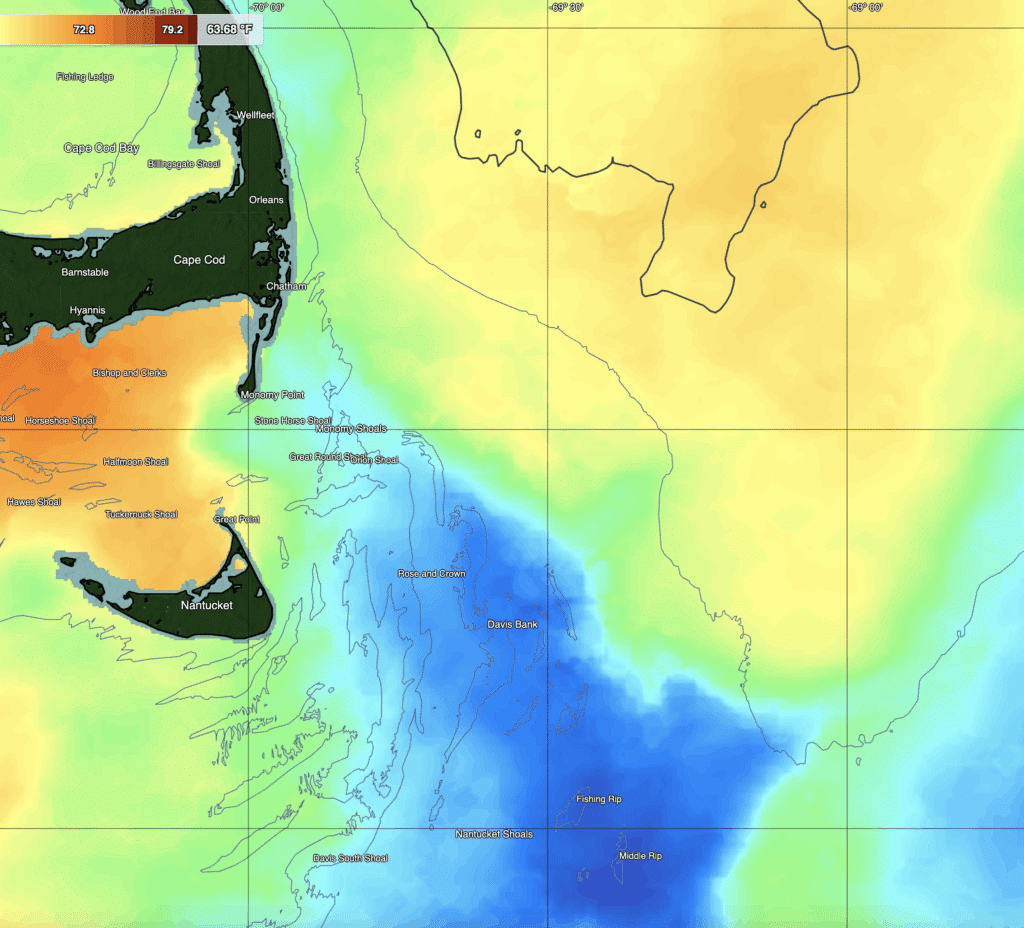
SatFish maps show you where to find ideal conditions for Bluefin Tuna:
- Sea Surface Temperature:
50–75°F / 10–24°C
(Optimal range: 60–68°F / 15.5–20°C) - Water Color / Chlorophyll:
Clean green to cobalt blue, 0.05–0.3 mg/m³ - Bathymetry:
In the Northeast, Bluefin are commonly found near sharp depth changes, offshore banks, and shelf edges, which concentrate bait.
Atlantic bluefin tuna are powerful, highly migratory predators that travel thousands of miles across the Atlantic each year. In the Northeast—off Cape Cod, Long Island, and the surrounding offshore and nearshore waters—they typically arrive from late spring through early fall, favoring cooler waters between 60–68°F. While they’re often found offshore near canyons, shelf edges, and temperature breaks, bluefin also come incredibly close to shore. In recent years, schools of giants and schoolies have been caught just off the beach, around sandbars, and even while anchored — especially in areas like Cape Cod Bay, Stellwagen Bank, the backside of the Cape, and the waters off Montauk. Bluefin target dense schools of bait like sand eels, herring, mackerel, and squid, and often feed aggressively along current lines, drop-offs, and inshore shoals. Their presence depends less on distance from shore and more on bait concentration, water temperature, and current movement.
Atlantic Bluefin Tuna Migration Patterns
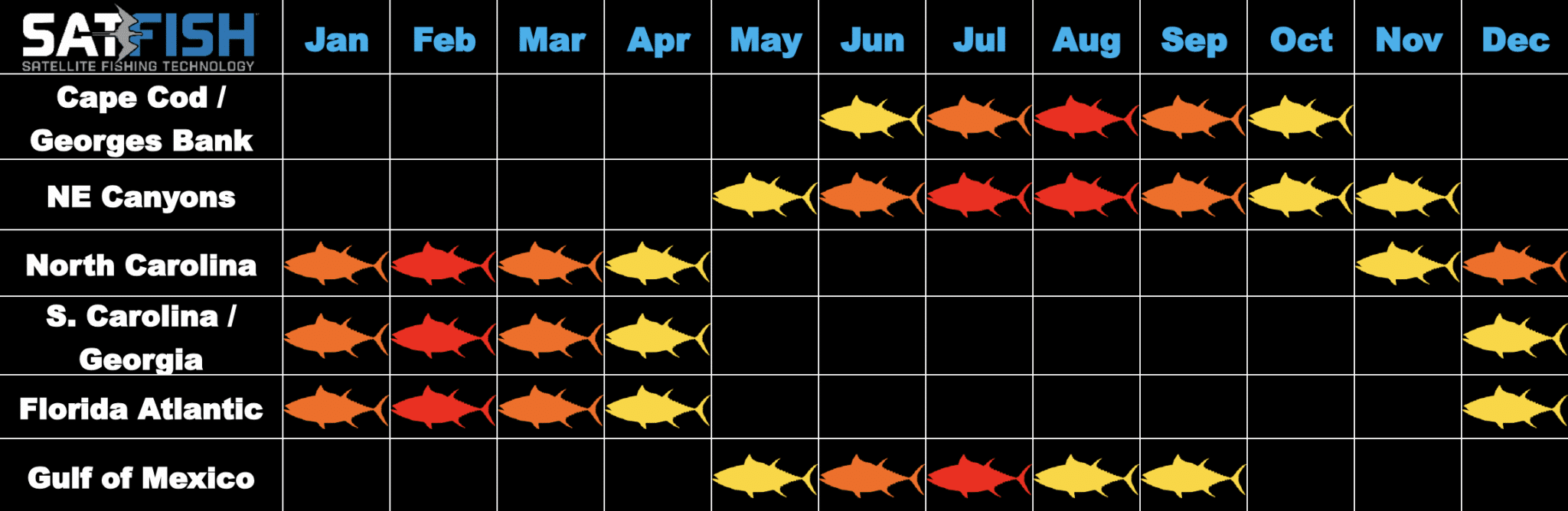
Atlantic bluefin have two main spawning grounds: the Gulf of Mexico and the Mediterranean Sea. Western Atlantic bluefin, the ones commonly encountered off the U.S. East Coast, spawn in the warm waters of the Gulf of Mexico during spring, typically from April to June. After spawning, adult bluefin migrate north along the U.S. East Coast, following cooler waters and abundant bait. From late spring through early fall, they appear off North Carolina, New Jersey, Long Island, and Cape Cod, often staying in the region as long as water temperatures remain favorable and food is abundant. Some bluefin, particularly juveniles and sub-adults, may overwinter farther south or in deeper offshore waters, but many migrate back toward the Gulf in late fall to prepare for the next spawning cycle. Their movements are driven by a mix of water temperature, bait availability, and age-related spawning behavior.
SatFish Regions Where Atlantic Bluefin Tuna Can Be Found
- Gulf of Maine
- Cape Cod / Georges Bank
- NE Canyons
- North Carolina
- South Carolina / Georgia
- Florida
- Gulf of Mexico (Gulf of America)
How to Catch Atlantic Bluefin Tuna
Whether you’re targeting 100-pounders off New Jersey in December or giants off Cape Cod in July, these are the most effective methods used by serious bluefin hunters:
1. Trolling with Lures or Ballyhoo
- Lures like Stretch 25/30 plugs, Nomad DTX Minnows, or Rapala X-Raps are key when bluefin are scattered or holding deeper. Troll them around structure, along temp breaks, or off bunker schools at 5–7 knots.
- Ilander-style skirts rigged with ballyhoo are deadly when fished in clean, cool water. Run them short (closer to the wake) or long depending on the spread.
Tip: In winter, when bluefin push inshore, trolling where you’d normally chase striped bass can result in surprise hookups.
2. Casting to Foamers and Breezers
- When surface activity explodes, topwater stickbaits (like Shimano Ocea or Heru Skipjack) and epoxy jigs or Colt Snipers are essential.
- Cast upwind and retrieve with speed or varied twitches. Stick to slim, natural colors when fish are keyed on sand eels or herring.
- Breezers may require subsurface offerings like slow-sinking lures or light jigs.
Stealth is critical. Use 60–80 lb fluorocarbon leaders and long casts to avoid spooking fish.
3. Jigging
- Drop knife jigs or flutter jigs vertically on marked fish, especially when they’re holding 100–300 feet down.
- Speed jigging can trigger reaction strikes from aggressive fish, while a slower flutter presentation is ideal for finicky ones.
Use heavy setups (PE5–PE8 class rods/reels) with braid and top-shot fluorocarbon for strength and sensitivity.
4. Kite Fishing
- Ideal for targeting larger, wary bluefin near the surface.
- Suspend a live mackerel, pogie, or even a squid or flying fish under a kite, presenting it far from the boat with zero line drag.
- Use a breakaway clip with a helium or air-inflated kite to keep the bait dancing on the surface.
This technique is especially effective off Cape Cod and the Outer Banks for fish over 200 lbs.
5. Flylining Live Bait
- Drift or slow-troll live bait without weight in areas where fish are near the surface but aren’t actively feeding.
- Match the hatch: mackerel, herring, or bunker on 60–100 lb fluorocarbon, with circle hooks and minimal terminal hardware.
It’s a go-to tactic when fish are breezing or showing sonar marks mid-column.
6. Run & Gun Hunting
- Scan for birds, slicks, sonar marks, or subtle surface ripples.
- Use stabilized binoculars and radar to locate active schools early.
- Stay mobile, but don’t run over the fish. Position upwind or up-current and let the school come to you.
Winter fish off the Mid-Atlantic often push tight to the beach—within a mile of shore—so don’t overlook nearshore bunker schools or striper zones.
From Our Blog
Resources & Further Reading
NOAA Fisheries – Atlantic Bluefin Tuna