

Kajikia albida
Family:
Istiophoridae
Other Common Names:
Spikefish, Skillie
Description
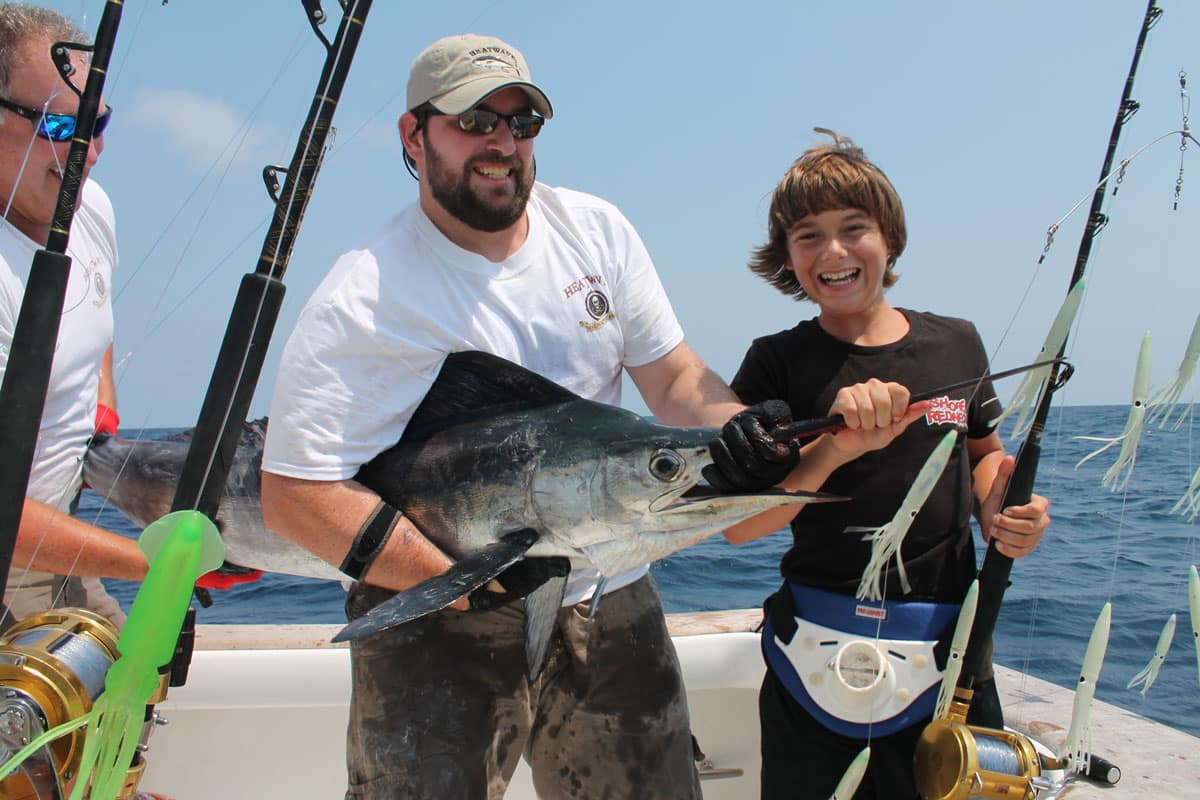
The white marlin is a striking and agile species of marlin found in the Atlantic Ocean, known for its cobalt-blue dorsal fin and sleek, elongated body. These fish are highly migratory, favoring warm, tropical, and subtropical waters. White marlin are typically found near the surface, often close to the continental shelf, where they hunt for their prey. They primarily feed on smaller fish such as mackerel, tuna, and sardines, as well as squid and crustaceans. White marlin are known for their spectacular leaps and acrobatic displays when hooked, making them a popular target for sport fishing.
Ideal Conditions for White Marlin
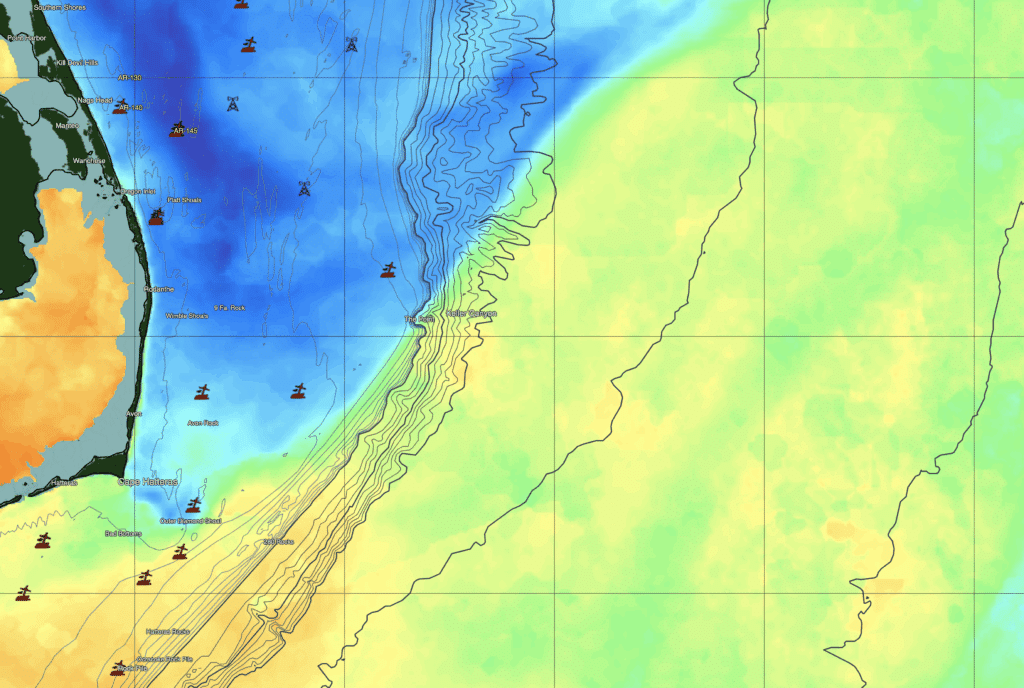
SatFish maps show you where to find ideal conditions for White Marlin:
- Sea Surface Temperature:
68-80°F / 17-30°C
(68-76°F / 17-23°C is ideal) - Water Color / Chlorophyll:
Clean blue to purple, 0.00-0.01 mg/m3 - Bathymetry:
Offshore canyons, banks, and ledges where upwelling occurs aggregating large masses of baitfish.
White marlin are warm-water predators that spend most of their time hunting near the surface in deep offshore waters. You’ll often find them along the edge of the continental shelf, especially where the bottom drops off sharply or where different currents meet. These spots usually gather a lot of bait, like squid and small fish, which is exactly what white marlin are after. They prefer clean, blue water in the 68–80°F range and are most active when there’s plenty of life around — diving birds or bait stacked up near temperature breaks. While they don’t rely on floating debris like some other species, they’ll definitely check out weed lines or logs if there’s food nearby. White marlin are curious and aggressive, often showing up behind your trolling spread or slashing at baits on the surface. If you’re in the right water with good signs of life, there’s a good chance one isn’t far away.
White Marlin Migration Patterns
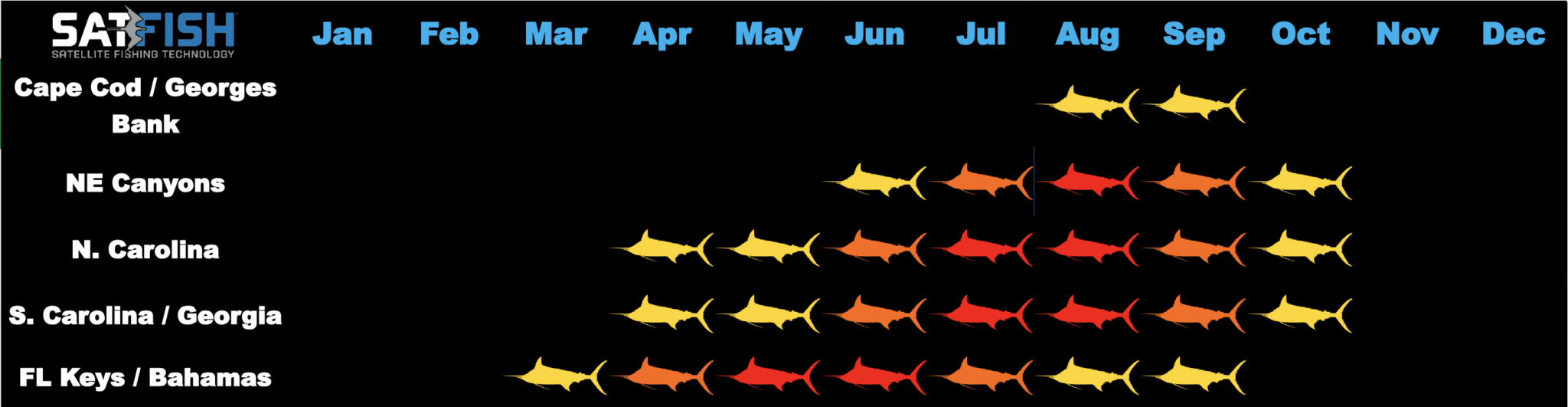
White marlin are fast-moving, highly migratory billfish that roam the tropical and temperate waters of the Atlantic. In the western Atlantic, they head north along the U.S. East Coast during the warmer months, usually from late spring through early fall. They tend to follow the Gulf Stream, showing up in solid numbers from the Carolinas to the Mid-Atlantic and into the Northeast canyons when the water hits that 70–80°F sweet spot. As fall sets in and surface temps drop, they slide back south toward warmer water, showing up around the Caribbean, northern South America, and the western equatorial Atlantic. That seasonal push and pull makes them a classic run-and-gun offshore target — one that rewards anglers who stay dialed into temperature breaks and satellite data.
SatFish Regions Where White Marlin Can Be Found
- Florida (all regions)
- Bahamas
- South Carolina/Georgia
- North Carolina
- NE Canyons
- Cape Cod/Georges bank (occasionally)
How to Catch White Marlin
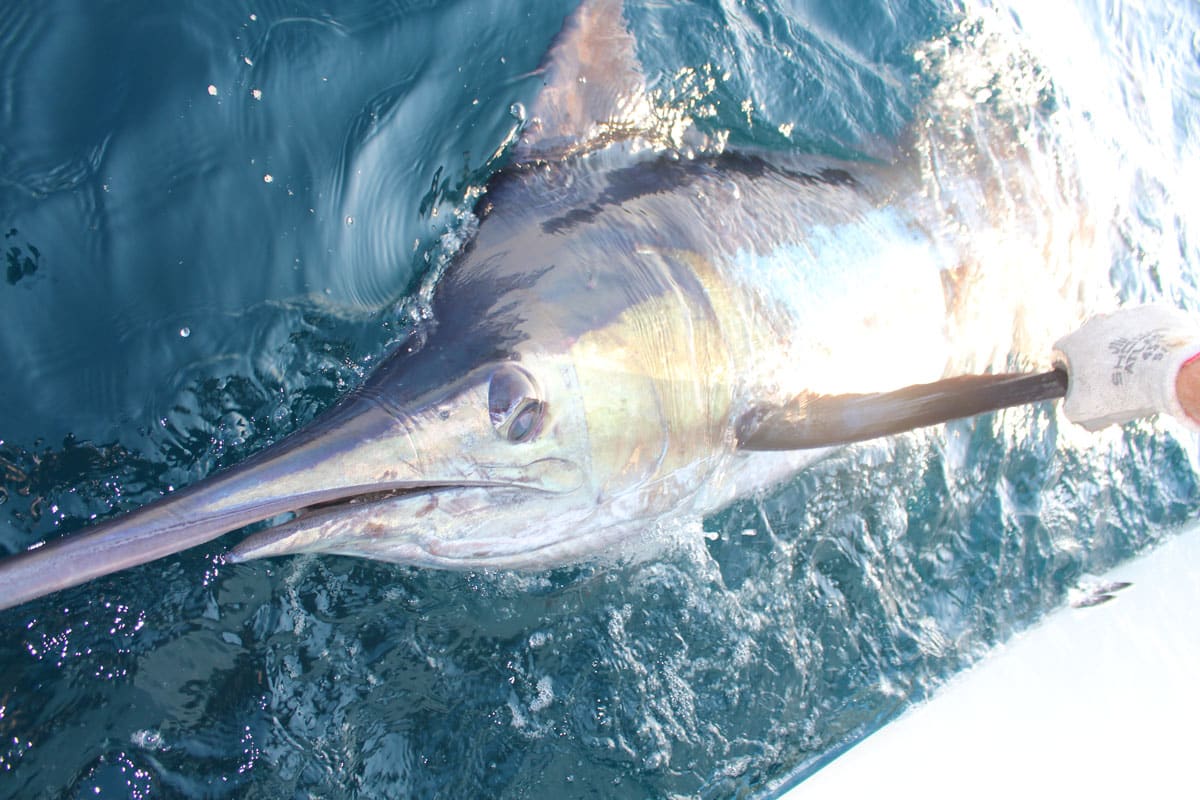
White marlin are fast, agile predators that often travel solo or in loose groups, especially when actively feeding. While they’re less commonly found in large packs like sailfish, it’s not unusual to encounter multiple white marlin in the same area when bait is stacked along temperature breaks or structure.
Here are proven techniques for targeting white marlin:
Trolling: This is the most common and effective method for white marlin. Pull small to medium-sized skirted lures or rigged ballyhoo at 6.5 to 8.5 knots, especially along temperature breaks, current edges, and canyon drop-offs. White marlin often prefer smaller, subtler presentations compared to other billfish. A staggered spread with flat lines, outriggers, and a teaser or dredge can increase your shot at raising fish. Teaser and pitch-bait setups with circle hooks are standard when switching to natural bait.
Sight Casting: In calm conditions, white marlin may tail or fin along the surface, especially near bait concentrations or frontal zones. When spotted, casting a rigged ballyhoo, mackerel, or live bait ahead of the fish can trigger an immediate reaction. This technique works well when cruising slowly through likely areas or while working active temperature and chlorophyll edges visible on SatFish charts.
Live Bait Slow-Trolling or Drifting: If you’re marking fish or working productive water, slow-trolling live baits like small mackerel, sardines, or tinker mackerel can be highly effective. Drift fishing with live bait near offshore structure, seamounts, or canyons where bait is thick—such as along the Northeast Canyons or Puerto Rico Trench—is also a go-to strategy during peak season.
Bird Activity & Bait Schools: White marlin often feed near bait balls and will track schools of sardines, anchovies, or flying fish. Look for small packs of terns or frigatebirds hovering or dipping tight to the surface. While marlin won’t “foam” like tuna, you may spot them swiping bait or slashing just under the surface near these concentrations.
From Our Blog
Resources & Further Reading
The Billfish Foundation – White Marlin