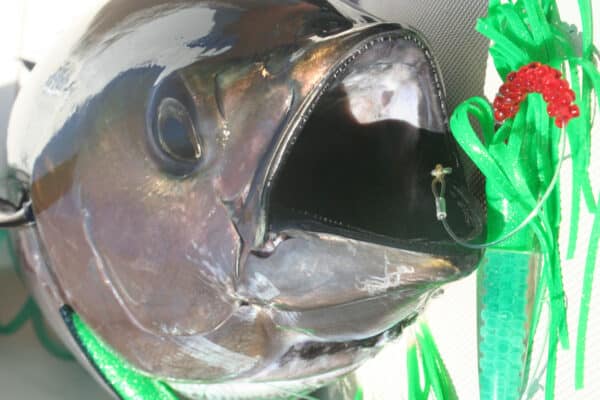
As the dolphin move up the coast this spring fishing for them will be very different than it is once summer sets in — here’s how to find those first fish and how to catch ‘em.
Once summer sets in decimating the dolphin is about as easy as offshore fishing gets along the Mid-Atlantic coast. Those mahi-mahi school up around commercial fishing gear polyballs and from mid to late June through October, you can reliably hop from one to the next and bail those schools into a frenzy. Sure, there will be oddball days when mahi won’t bite and you’ll have to work a bit harder to tease them out of the lockjaw. And if other boats have already picked over the polyballs it may take an extra effort. But most of the time it’s game on from the first cast. The early season? That’s an entirely different story…
Early in the year the fish won’t have flocked up around that gear yet, and unless you luck into a thick weedline or some flotsam, bailing is off the table. So, what’s an angler to do if you’ve caught your fill of tuna, the tunas aren’t around, or you just plain love mahi-mahi? Employ these tactics and with a little luck you’ll soon be putting those blue and green missiles in the fishbox.
Watch the Water
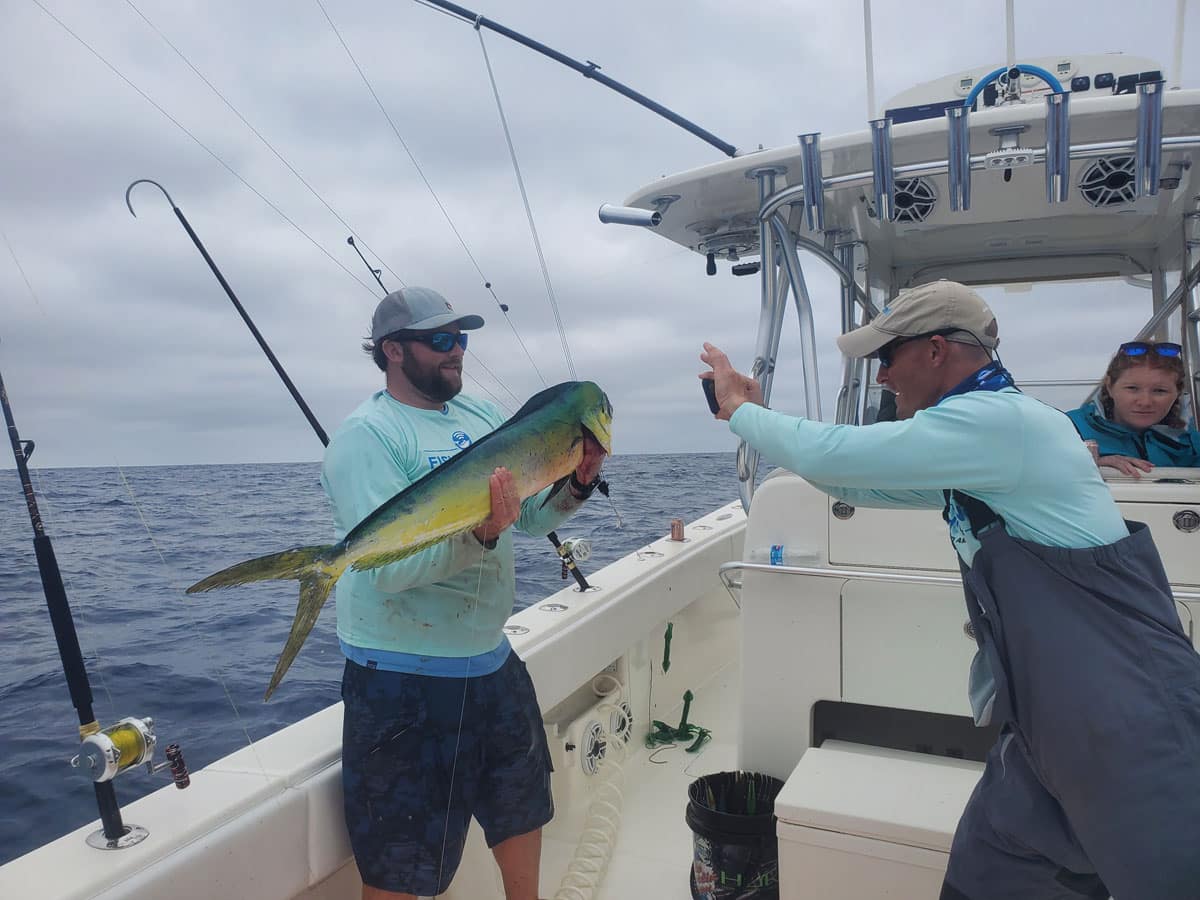
Not with your eyes — with Satfish. As the fish migrate northward they’ll be following two things: temperature breaks and warmth. As with other pelagics, the early season mahi-mahi will be relating to temperature barriers as they’ll later relate to structure, hunting for bait where different bodies of water collide and mix. Unlike mid-summer, however, they’ll also be looking for the warmest water possible. While they can tolerate water in the mid- to upper-60s, they really want 70 or more degrees and are happiest in 75- to 80-plus degree waters. The means that finding a finger of 72-degree water surrounded by 69-degrees can be a boom. And when the surrounding waters are in the low 70s and you spot an area where temperatures spike at 75, you have an even better shot at finding fish. Bottom line, troll breaks but if you aren’t catching and water temps are marginal, if temperature keeps going up as you head in one particular direction or another stick with it — even if that takes you away from the break itself.
Shrink the Baits
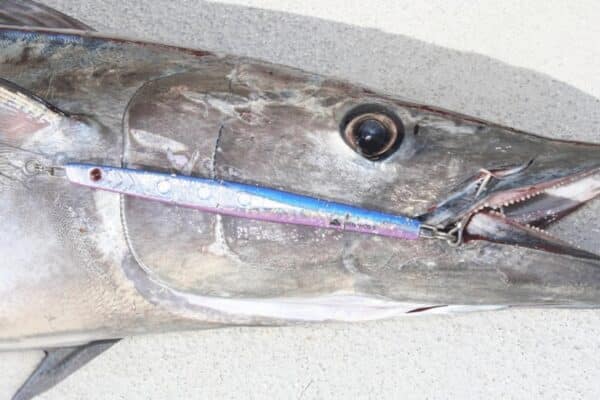
If you’re focused on tuna at this time of year you’ll be pulling decent-sized ballyhoo, but when mahi are the target you’re better off pulling dinks and colorful plastics that fit into the palm of your hand. The reasons are twofold. First off, mahi of any size won’t hesitate to slam small baits, but sometimes even larger ones hold back when presented with a bigger offering. Secondly, even though you’re surely hoping to catch big fish, if micro-mahi are in the area you’ll still want to know about it. Their presence is a clue that you’ve found an area where conditions are right and fish are present. Even if catching that little fish is less than ideal, you’ll want to stick around and work the area further to see if his big brothers and sisters are around.
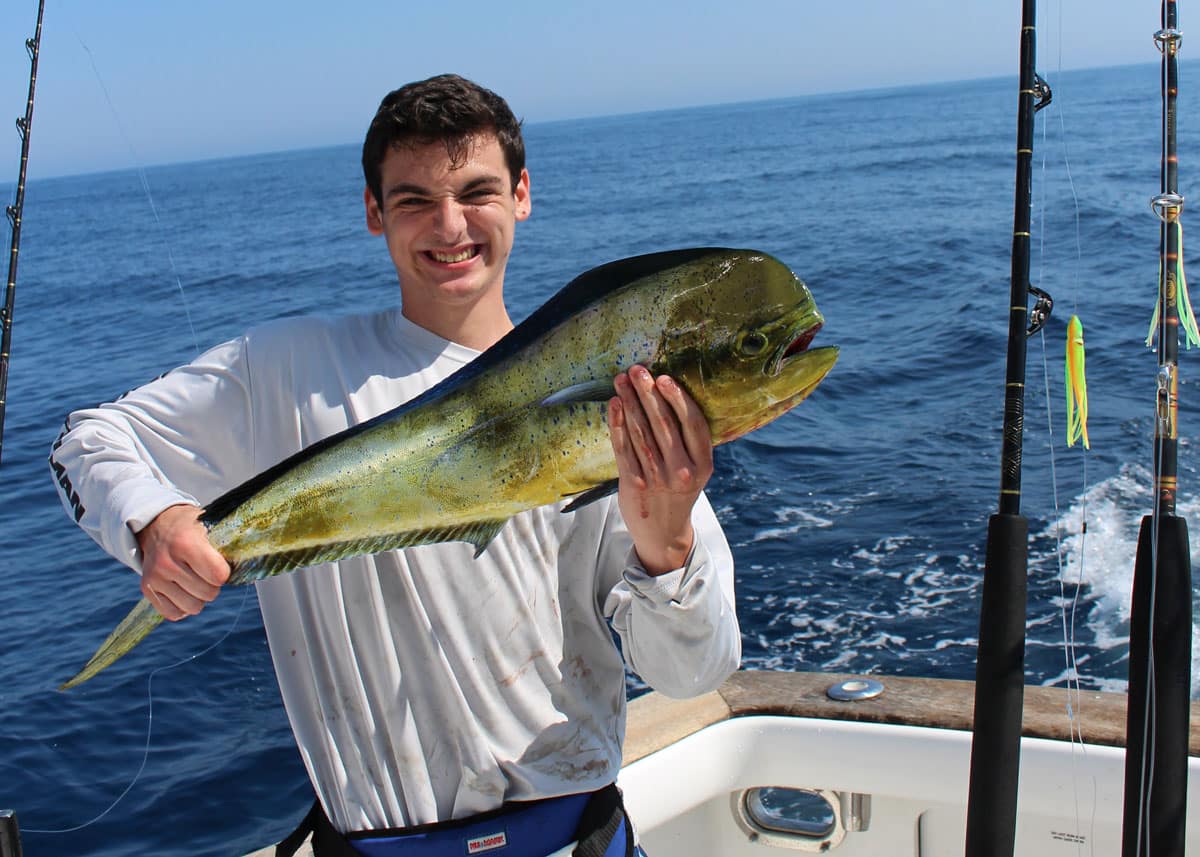
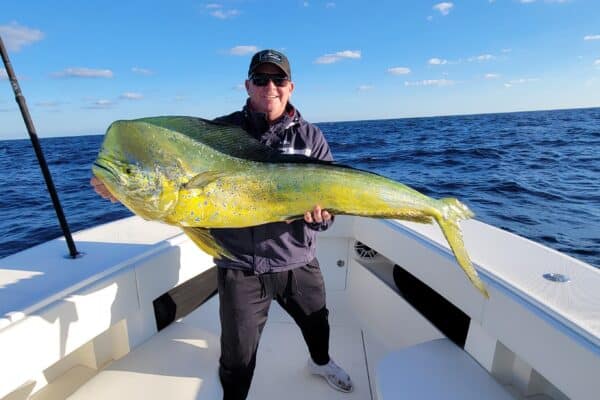
Wait a sec—the early season is sometimes when you can find the biggest mahi of the year, loners and pairs, which sometimes are the leading fish of the northward migration. Won’t you want to focus on finding those big boys? Absolutely. So putting out one or two larger baits to tempt them is not a bad move. But flip the script; usually you might put out six or seven bigger baits and one or two smalls to catch the oddball little fish, but in this scenario, put out five or six smalls, and one or two larger ones. Note: match leader size up with the baits. You’ll get more bites if you drop all the way down to 60-pound test with the smaller baits, and 80 or so for a large one. Just be sure to adjust drags accordingly.
Eyes Wide Open
When you’re trolling for billfish you watch the spread, but when early season mahi are the target watch the water from the baits to 10’ to 20’ behind the boat. At this time of year weeds and flotsam is less prevalent than during summertime or fall, and those fish are looking for cover. Often they’ll be attracted to the boat itself and it’s not terrifically unusual to look back and spot a school of fish that somehow missed all your baits, but is following right behind the transom. Other times, a school will follow a hooked fish right up to the boat.
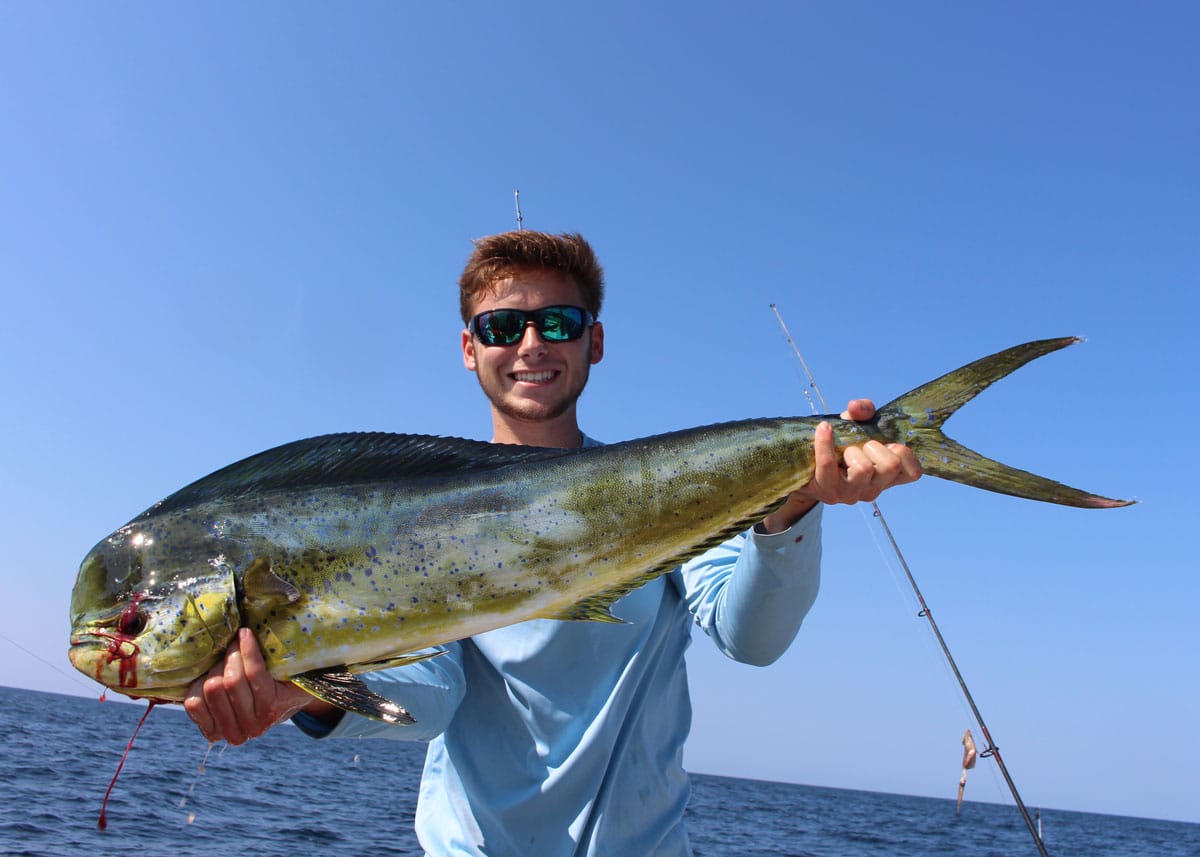
To take advantage of the situation being prepared is key. Always keep a small bucket of chopped fish in the fish box so you can slow down or stop, tease the fish into a frenzy, and crank your close trolling lines in closer. You probably won’t get them to the boat before they get smashed, but if you do, leave them dangling right next to it (you’ll be surprised how often they get smacked hanging right next to the hull) and reach for the next closest lines to start cranking. Repeat the process until all the lines are in, then if there are enough fish around shift into bailing mode and enjoy some unexpected early season carnage.