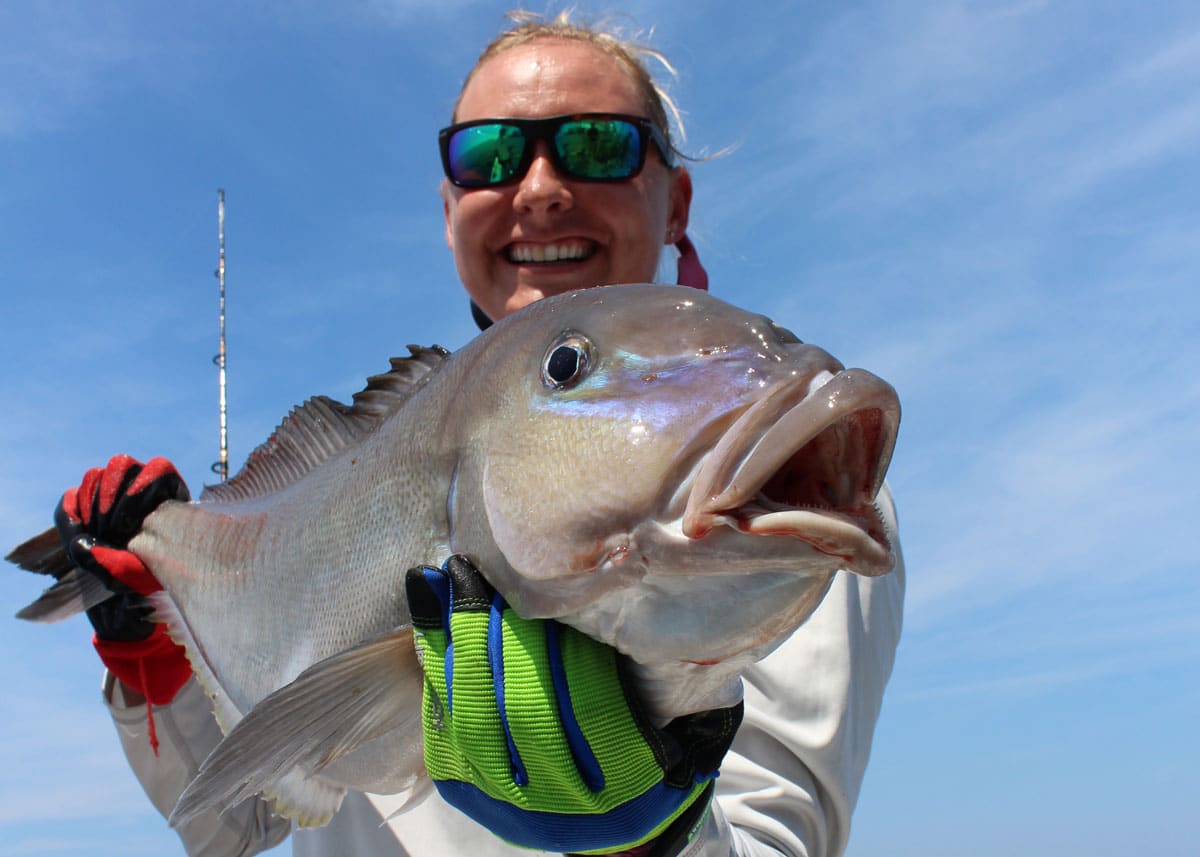
Blueline tilefish may not be the most impressive fish in the ocean, but they’re relatively easy to find and almost always willing to bite.
You need to find a reliable way to save the day when trolling has left you with a blank scorecard at the eleventh hour? All along the Mid-Atlantic coast, blueline tilefish fit the bill. They’re relatively easy to locate, they just about always bite, and filling the fishbox usually takes just an hour or two. Here’s how to find ‘em, and how to catch ‘em.
Locating Blueline Tilefish
The good news: find one blueline, and you’ve almost certainly found a spot holding enough to catch a limit. These fish live closely grouped in well-defined territories, and it’s rare to encounter loaners. The bad news: the ocean is a desert, and you have to find the oasis.
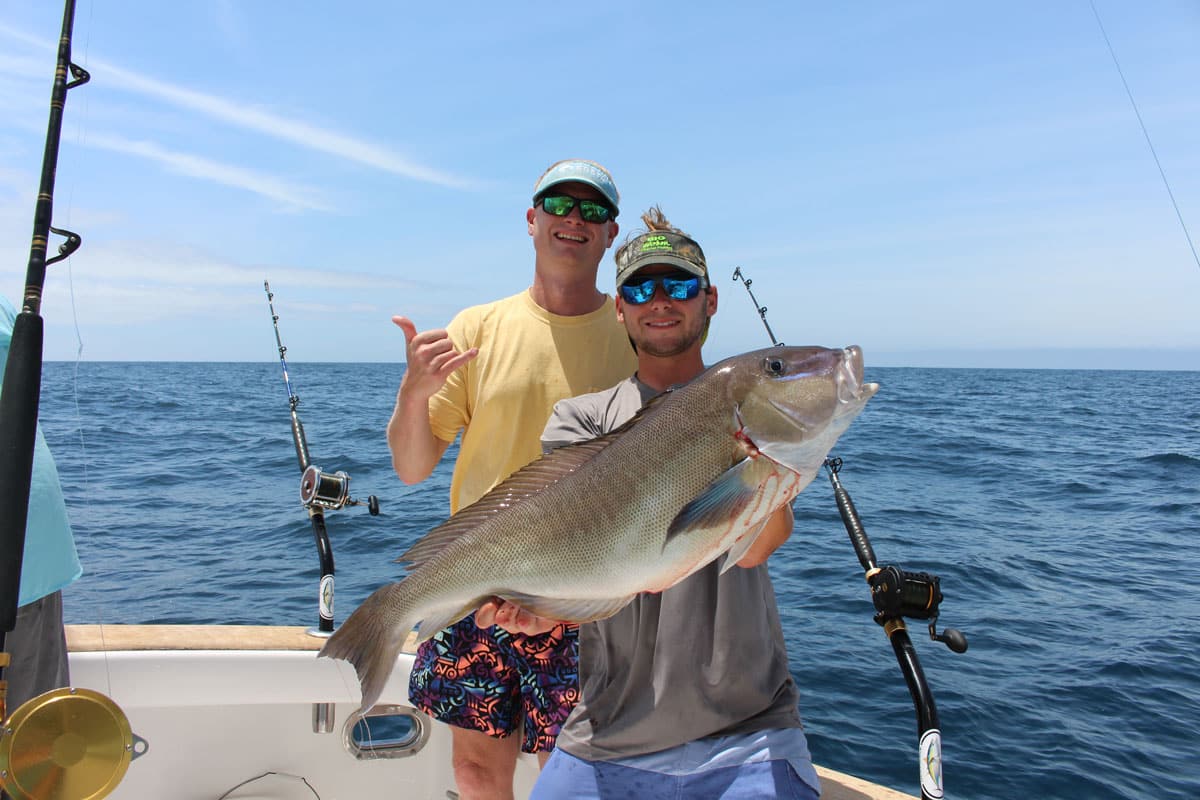
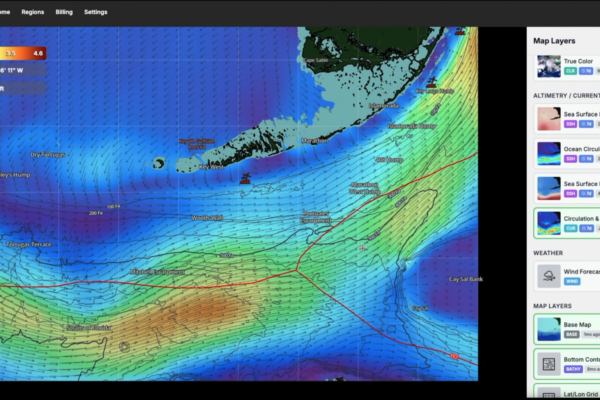
As a general rule of thumb, do your searching in the 250’ to 350’ range. You’ll find them shallower and you’ll find them deeper, but this is the zone where you’ll usually encounter mass quantities of the fish. Locating irregular or live bottom is the key. Bluelines like a wide range of bottom types and can be found on sandy bottom, mud, or along rocky outcroppings, but in all cases they’ll be attracted by some form of anomaly as compared to the surroundings.
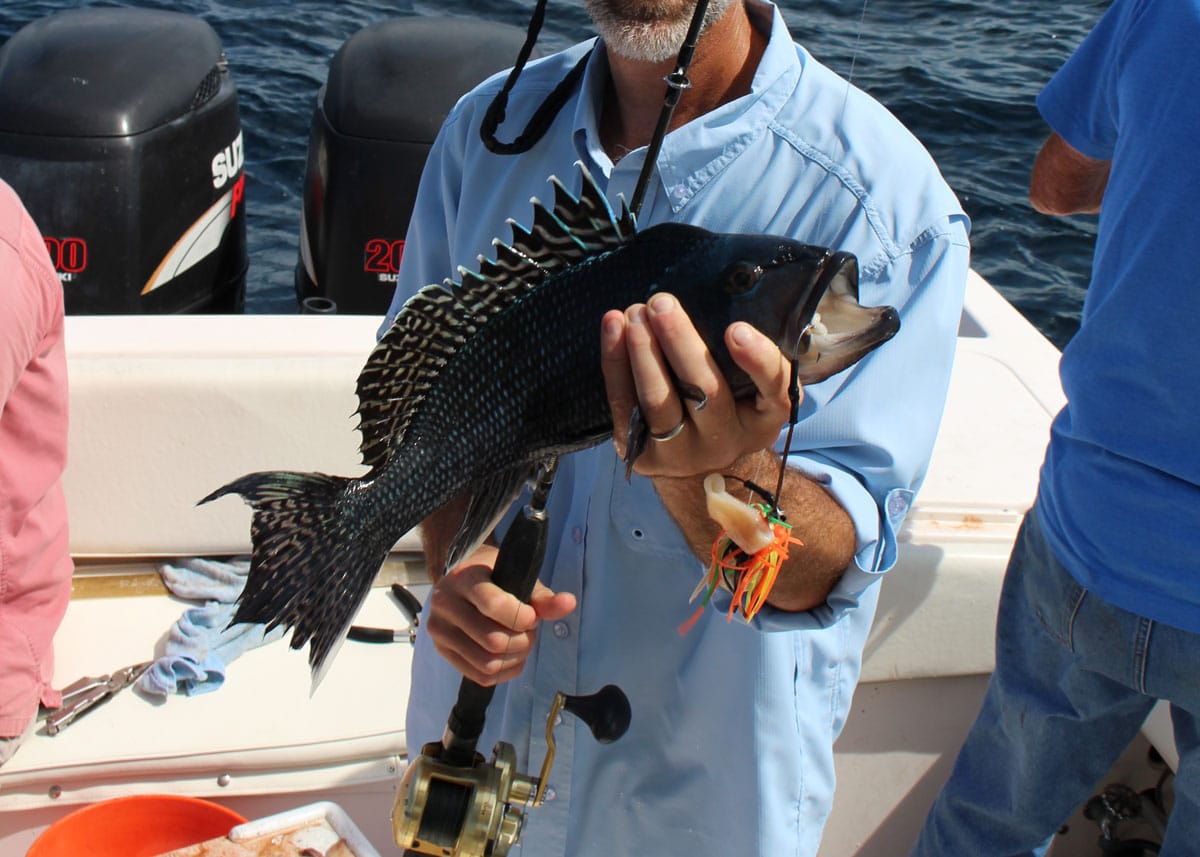
Finding these anomalies is, of course, easier said than done. You might spot fish trap floats (often set to catch the black sea bass that tend to intermingle with bluelines in this same depth range) or see unusual bottom on the fishfinder screen, and surely these spots should be prospected. But in a surprising number of cases good blueline bottom will be found in the same areas we fish for pelagics. Life begats life, and a patch of rocky bottom in 300’ that is known for attracting tunas will often hold tilefish as well.
The eleventh hour in a day of trolling isn’t, however, the time for prospecting. Savvy anglers will set aside a full day of fishing for the task, usually when the bite for other species has been slow. Plan out a route with five or six possibilities and accept that you’ll burn out a tank of exploration fuel. You’ll almost certainly hit paydirt sooner or later. You can start putting waypoints on the chartplotter, and when the eleventh hour comes in future trips you’ll have day-saving destinations to head for.
Catching the Bluelines
Fortunately, if you can find these fish you can almost always catch ‘em. Dropping down cut squid is the ticket, though like most species these fish are opportunists and bluelines will strike just about anything edible—cut fish, crab chunks, you name it.
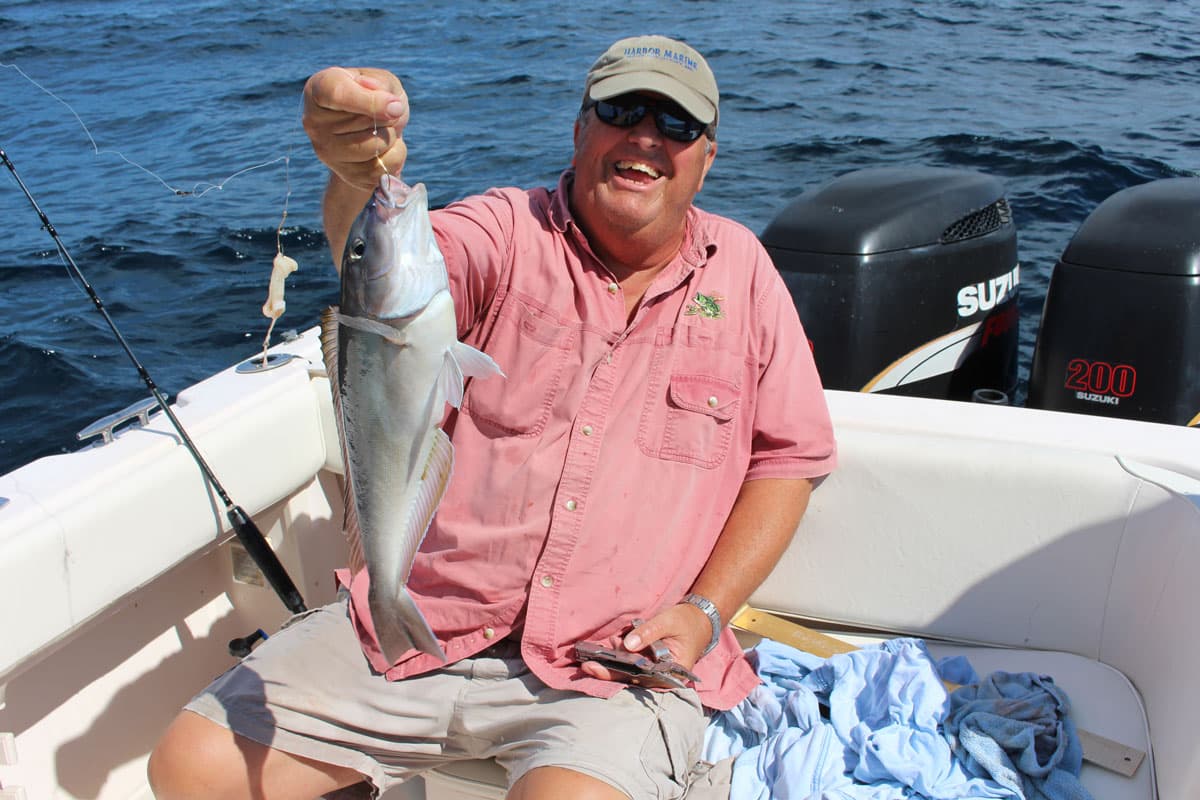
While some anglers do opt to fish for bluelines with electric reels, many others are perfectly happy to hand-crank. Sending baits 250’ or 300’ down is right on the edge of “deep” dropping versus regular old bottom fishing, so take your pick. Top-and bottom rigs with 60- to 80-pound test leaders and 8/0 circle hooks work fine either way, and depending on the current and wind you’ll probably want to add between one and two pounds of lead.
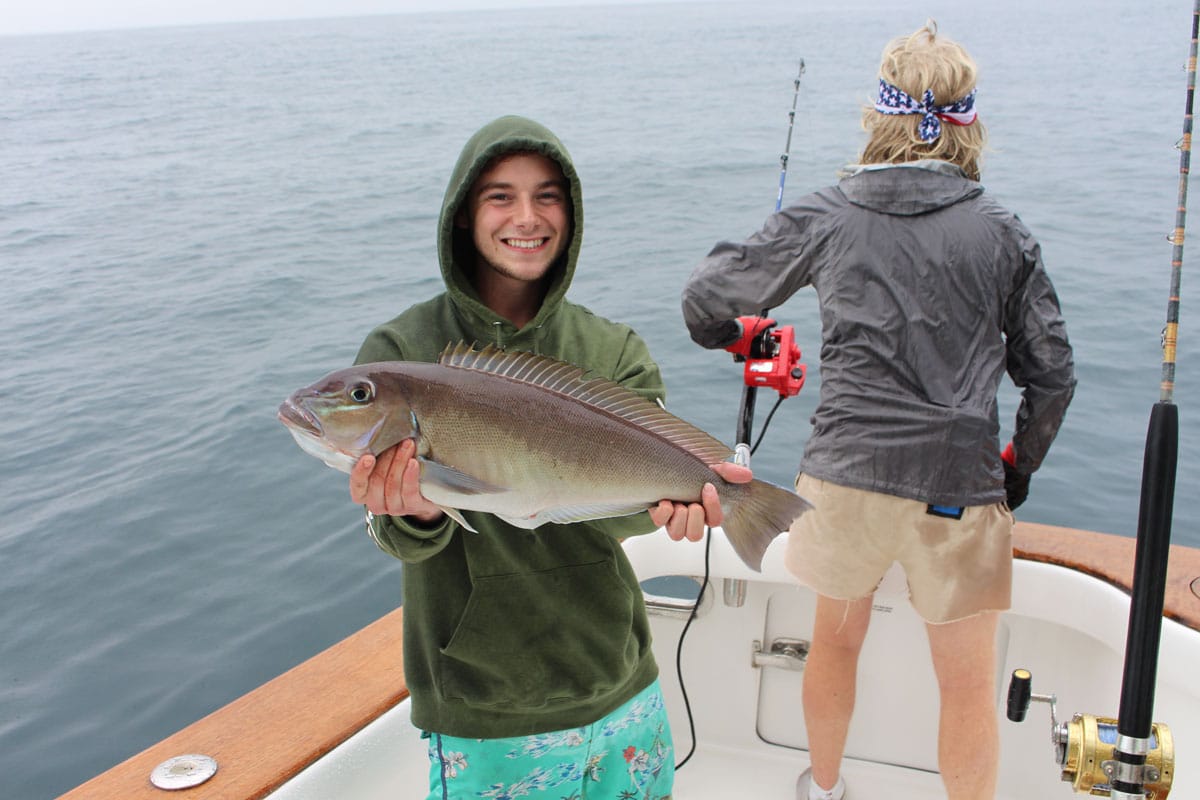
Another fun way to catch bluelines, and one which often results in catching the larger fish in the school, is dropping baited jigs. Two-hook octo-style jigs like the Mustad Inkvader, Nomad Squidtrex, or Shimano Lucanis, are ideal for the task. They sink like a rock, the bluelines love ‘em, and two hooks means you can add two bait strips so if you miss a tap you won’t have to reel back up to check your bait every time. On a calm day a 150-gram jig fished with relatively light braid might do the trick, but often you’ll want 200- to 300-gram jigs. Note that hovering and gently jigging them just off bottom is usually more effective than giving big jerks on the rod, and since these jigs have J-hooks rather than circles, using braid line and a fast-action rod is important for deepwater hook-sets.

Note: Cranking these fish up will cause barotrauma, and half the time their eyes will be popping out of their heads. So if you catch it you keep it; culling fish doomed to a certain death is low class. Same goes when black sea bass are mixed in, and if catching undersized sea bass is an issue in a spot responsible anglers will move on to a different location.
Coming home with a fishbox full of bluelines may not make any headlines, but it can certainly save the day when the action is slow. Plus, their fillets are topnotch on the dinner table. Be prepared to catch them, and that eleventh hour can turn out to be one heck of a lot of fun.