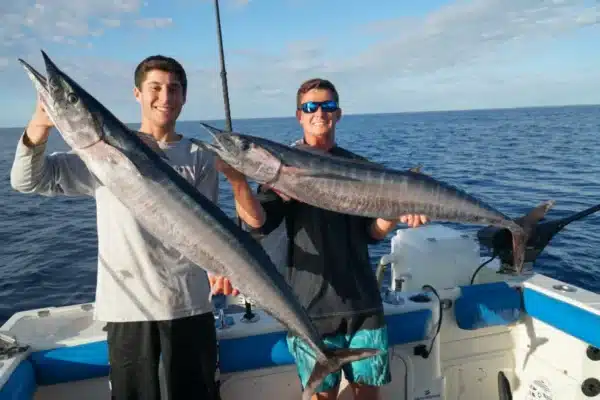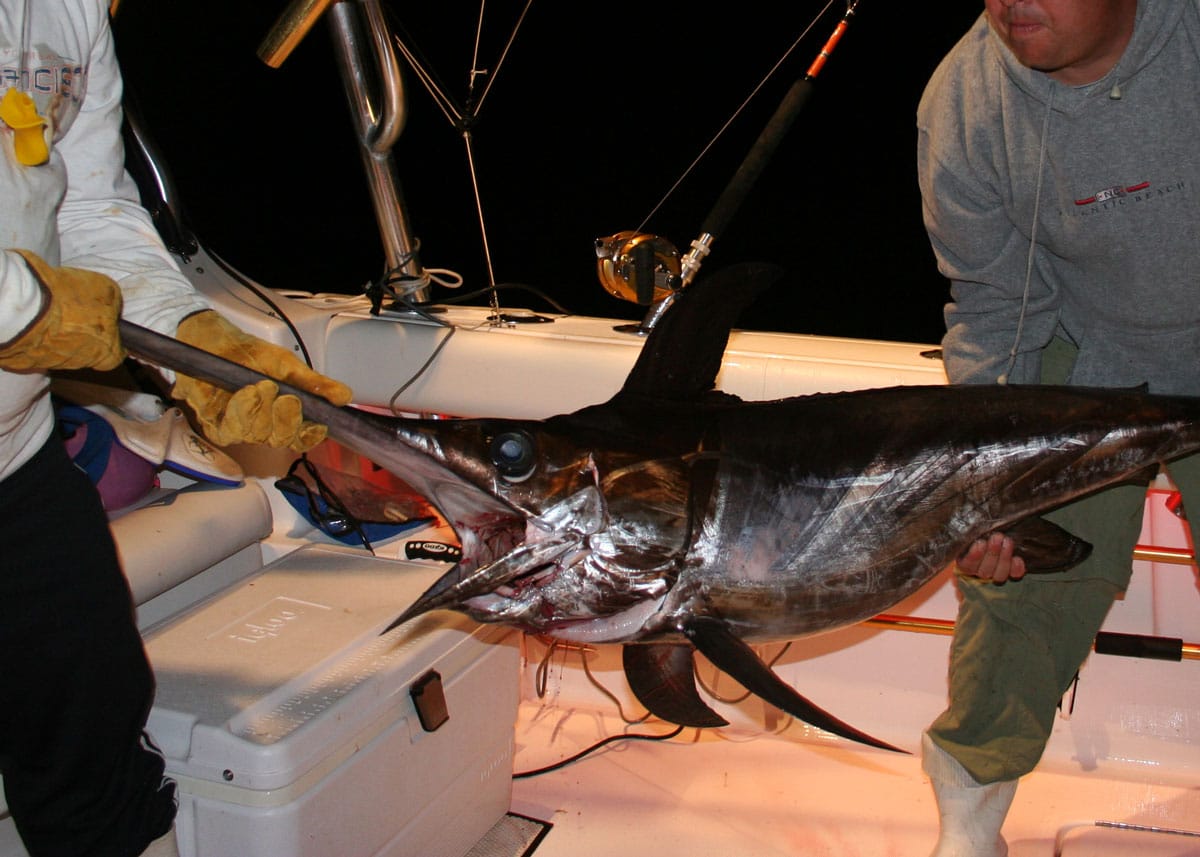
Fishing offshore all night long can make for the trip of a lifetime.
Spending the night offshore is a blast in more ways than one, but nothing hurts more than an empty cooler after 36 hours at sea. You want to stack the deck in your favor? Of course you do—and these five tips will help.
1. Illuminate the ocean with a green light. You’ll see offshore fishing lights in white, blue, and pink, but none of these colors will attract as much bait and life as a green light. While researching their effects some years ago we tried setting out two colors for a few hours at a time, one on each side of the boat, on a series of three different overnighters at the canyons. Each and every time without fail the green light attracted at least twice as many squid, flying fish, tinker mackerel, and other critters, as compared to the light on the other side of the boat. Hydroglows are the gold standard; don’t leave home without one.
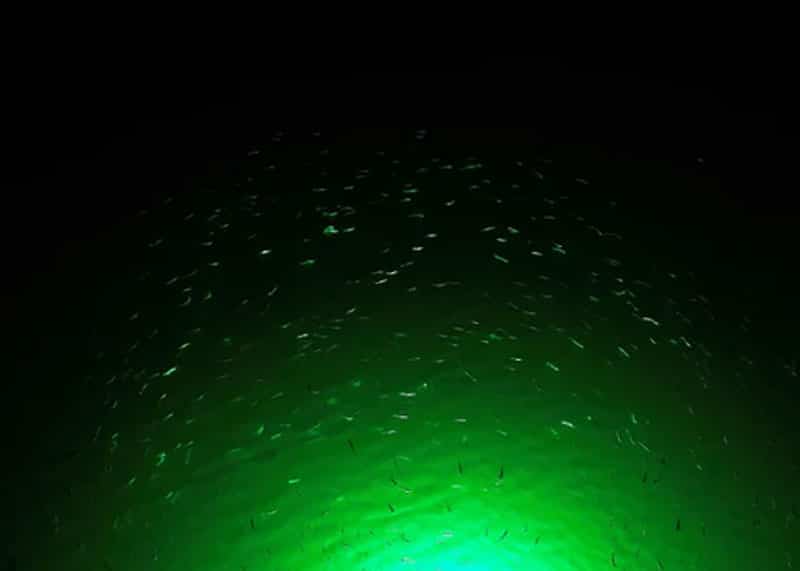
2. Always bring squid jigs. Squid often show up in the lights when you’re offshore in the inky darkness, and catching them is a blast. You can load the cooler with calamari, stock up on bait, and more importantly, send them right back over the side as live baits. The moment you catch the first bait-sized squid rig up a bare hook, slide it through the tip of the squid’s mantle, and float it back until it’s just outside of the light-line. Any predator within sniffing distance will pounce on it. As you catch more squid toss some in the livewell for additional live baits before filling your cooler.
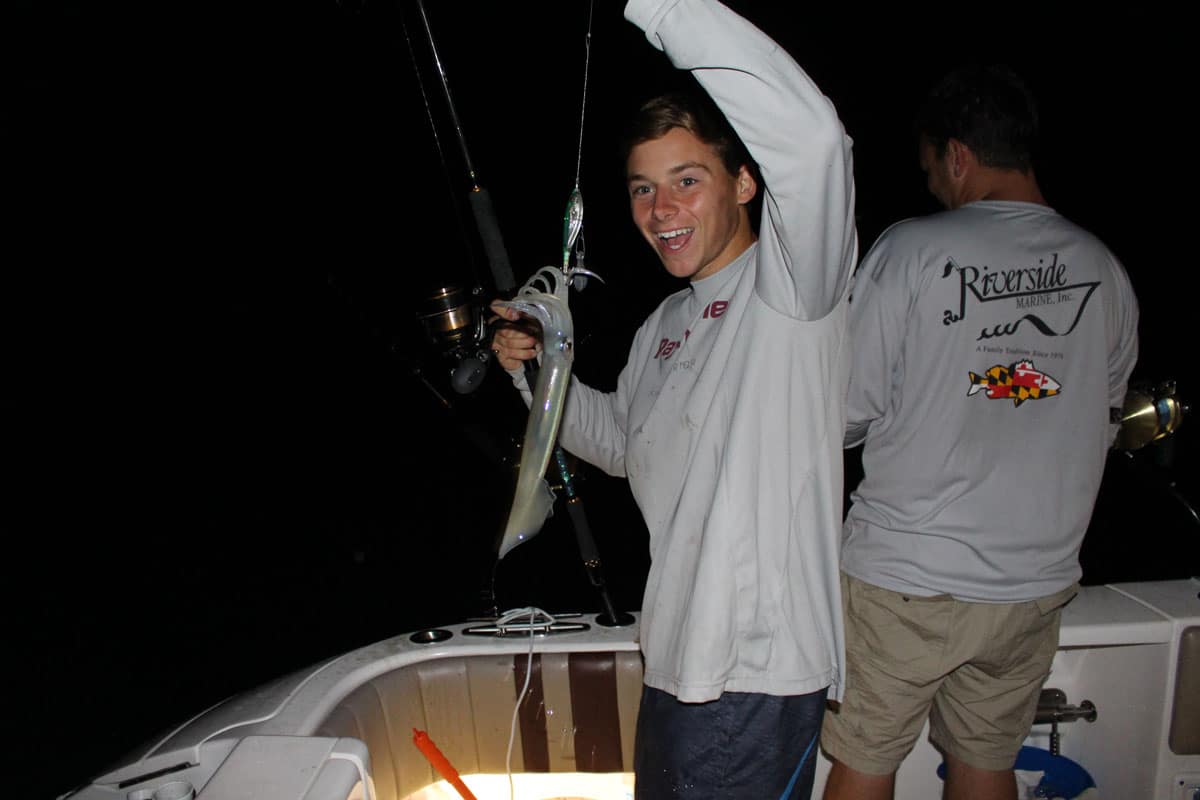
3. Always bring a long-handled dip net. Again, this is for prime live baiting, but in this case with flying fish. Flying fish will often wander into green lights in a sort of daze, swimming slowly around and often circling the light itself if you have a tube-style light vertically deployed. They don’t usually bite at baits, but with a long-handled dip net you can scoop them up. You’ll only get one at a time because when you scoop the others will scatter, but after a few minutes they usually return. As with the squid, rig up a hook and get a live one right back out there.

4. Bring plenty of chum and chunks, and work to establish a steady flow of fish-attracting goodies. The toughest part here is that at 3:00 a.m. if the bite is slow there’s likely to be only one person left awake, and he or she will have to pay constant attention to keeping the flow consistent. (Note: when you overnight offshore it’s always imperative for at least one crewmember to remain awake and keep watch at all times, period, as a matter of safety). When you’re drifting around out there in the darkness you never know when your boat might intersect with a school of fish, and an overnight bite can go from nonexistent to utter chaos and multiple hook-ups in the blink of an eye. Make sure there are always plenty of fish-attracting bits in the water so if and when you do come across those fish, they stick around and go into a feeding frenzy.
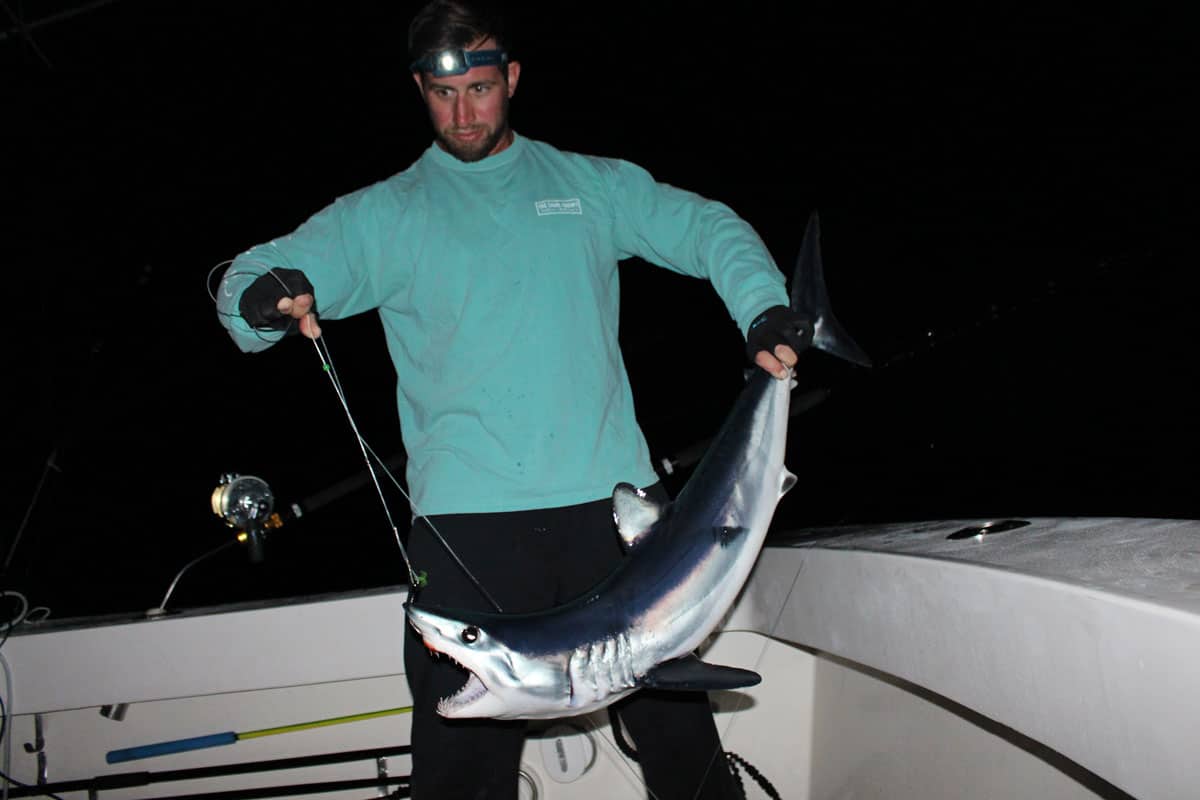
5. If you’re getting sharked, shut off the lights and chum and move a few hundred yards (assuming you’d rather be catching other species). Otherwise, most of the time they won’t leave on their own and may stick with you for hours at a time. If they rapidly reappear after a short move you may need to relocate entirely, but often it isn’t hard to shake them off your trail. We’ve seen nights when one boat was covered up in sharks while another boat a mere quarter mile away was covered up in yellowfin, and a brief shut-down and repositioning resolved the situation.
BONUS TIP: If you aren’t armed with lighted life jackets, at the beginning of the trip hand every crewmember a cyalume light stick and have them attach it to a belt loop with a rubber band. That way if the worst happens and someone ends up in the drink, they’ll have a waterproof light source always close at hand.
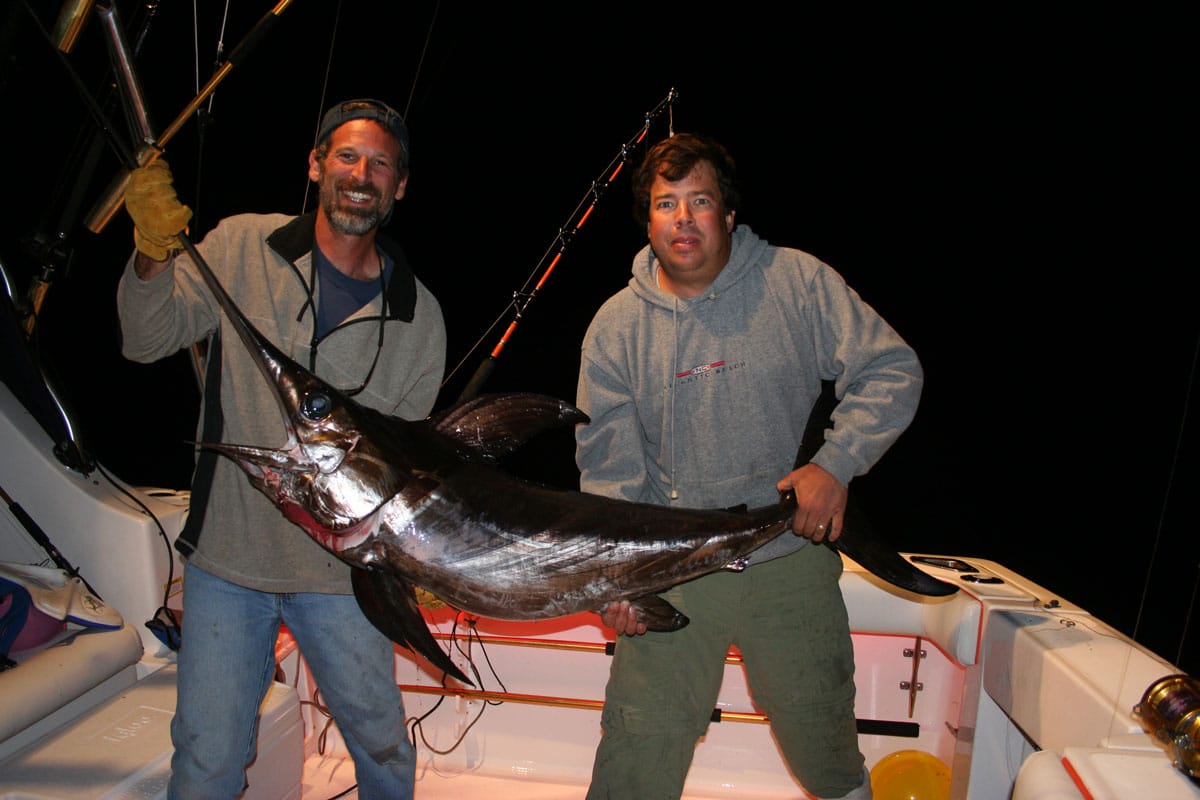
While there will be overnighters that are frustrating—as is always a possibility when you go fishing—spending a night offshore is a unique experience that you’ll never forget. Unidentifiable sea creatures often show up in the lights, you may end up seeing an unimaginable amount of life in the lights, and if all goes well, rods will be bending one after the next. Yes, it will take a lot of effort and if the weather turns sour it can be incredibly uncomfortable. But big risks carry big rewards. And if you haven’t yet spent a night at the canyons, trust us, it can truly be a blast.