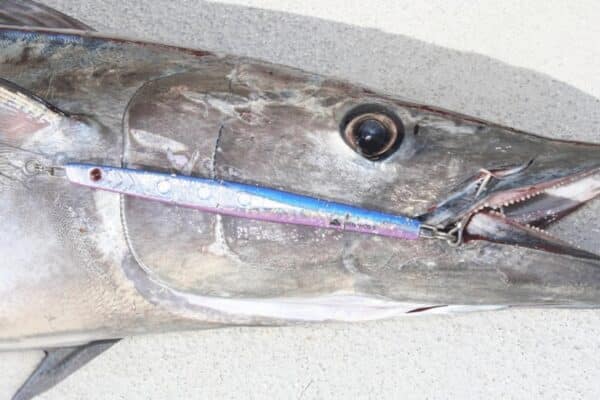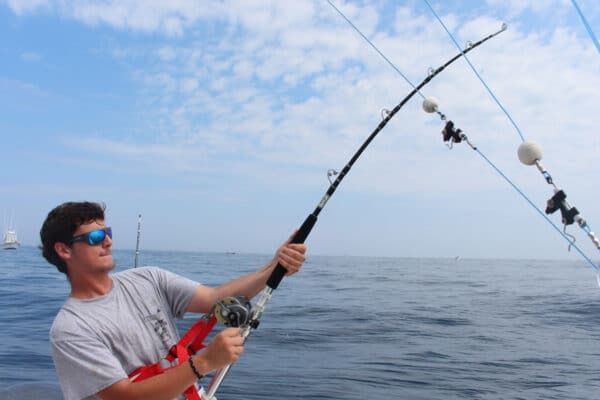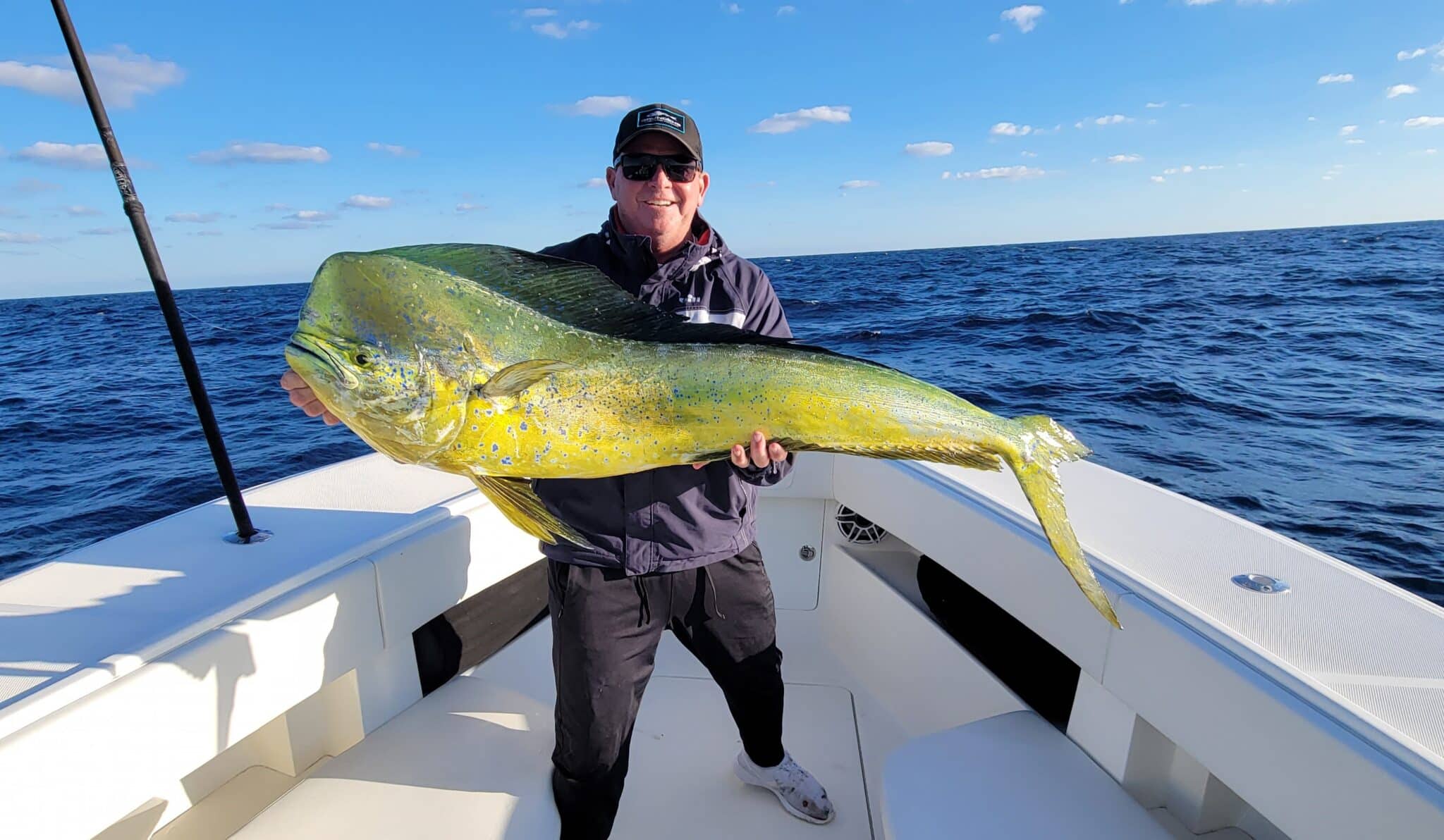
One of the best, yet hardest parts of fishing offshore is the fact that there are so many options. Best because you have options, and hardest because you can end up not doing any one type well because you’re trying to do too many. What you need is a game plan!
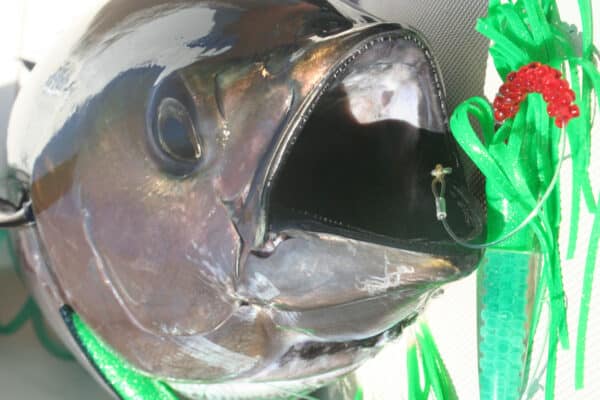
Plan A is the type of fishing you’ve heard is happening or something you’ve been wanting to do. For example, Pete Black, owner of the Lola and I were dying to get back offshore on the next weather window. After an extremely long fetch of hard east wind, we’ve had Pete’s 39 Seavee sitting in the lift too long. Before the start of the blow, the fleet of charter boats in Port Canaveral and some buddies had a few great days catching dolphin. We often experience a “Fall” run of dolphin. Usually encountered when starting to look for sailfish as the water cools and the first few cold fronts start to push fish southward from higher latitudes.
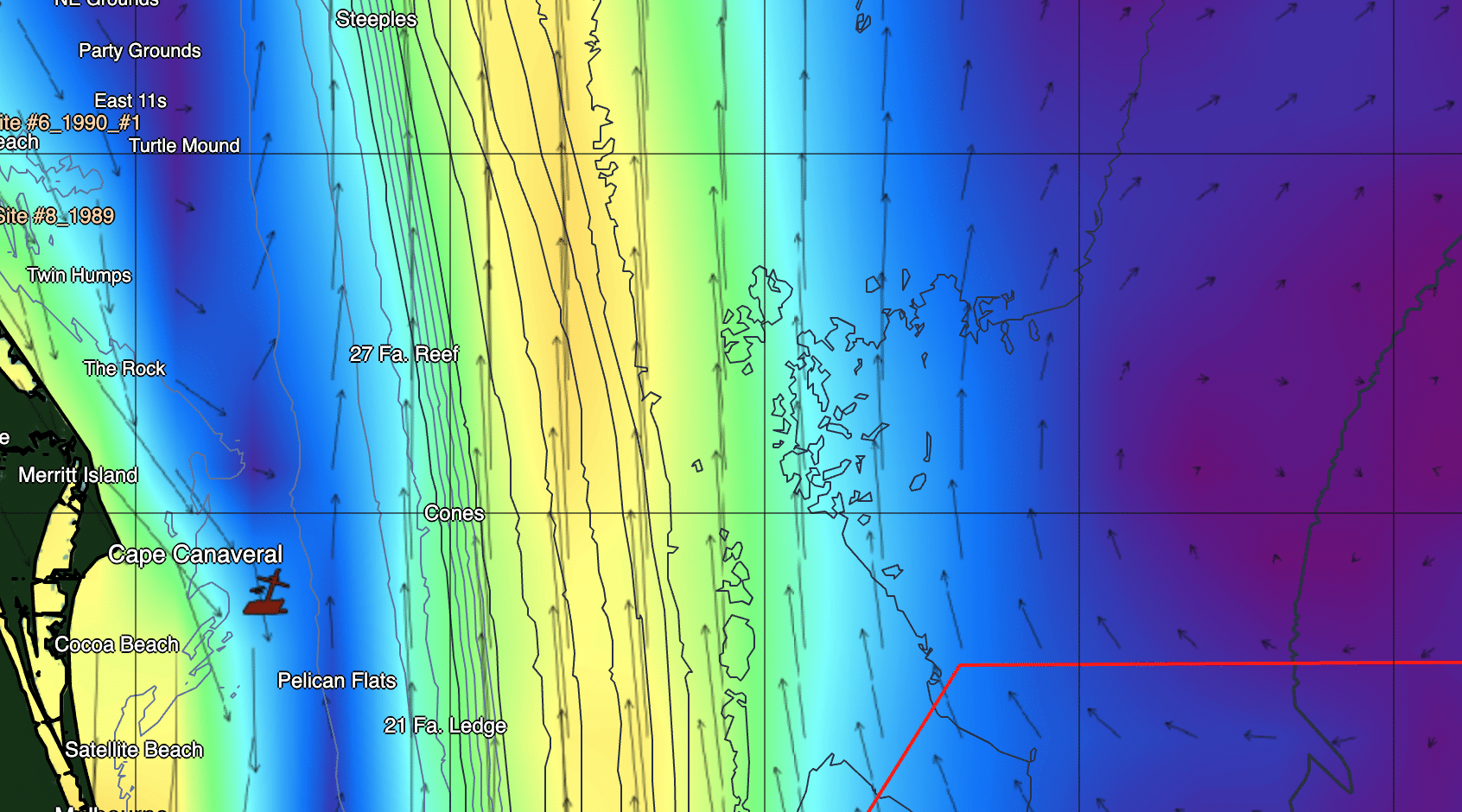
As we think about dolphin fishing as Plan A, we are studying Satfish charts to locate the warm, clean water and the location of the hard current. SST charts, Hi-Def Chlorophyll and Current charts are all available and up to date on SatFish. Looking for the hard edge of the current, often the western edge of the Gulf Stream is a likely spot where weeds and debris collect as well as being a gathering area for bait. We prepare for Plan A by rigging lots of ballyhoo, strip baits and teasers. But often times the great fishing your buddy had last week is long gone except for the stories and after a hours of trolling and searching, you might start thinking about Plan B.
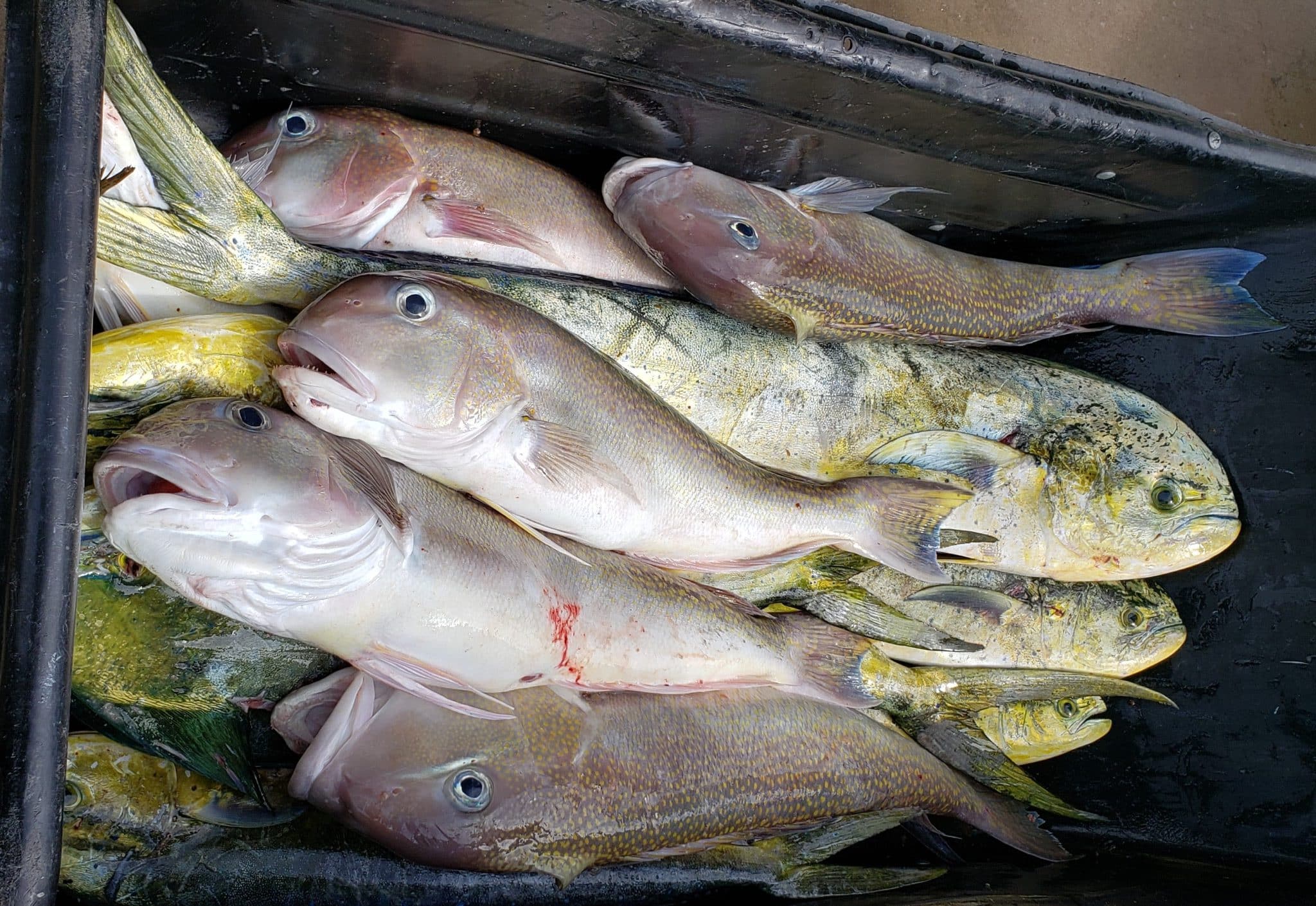
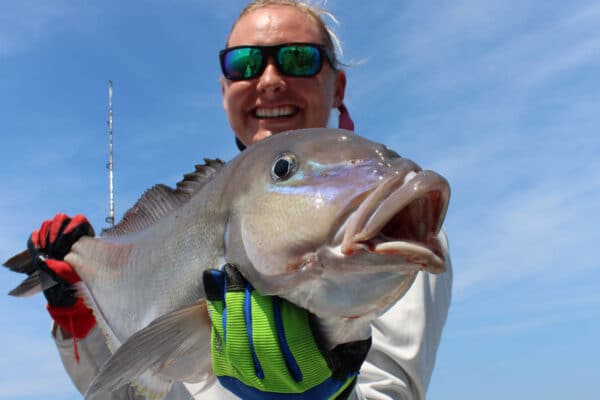
Plan B is going to be some type of bottom fishing. Sometimes we fish the deep for tiles, but more often we fish for a variety of snapper and grouper depending on what seasons are open on various species. I’ve recently begun to study the current charts on SatFish to determine what areas are predicted to have a “south” tide or current. That means the current is flowing towards the north and is often the best for fishing. “North” tide is often terrible for bottom fishing and can shut down even the best of spots. Having the SatFish current chart is a big help and I’m going to be comparing the chart to reality very closely to maximize its potential to help predict the best zones to fish. Of course, other factors come into play as well, but any technological advantage is welcome in my book.
Occasionally you need a Plan C, D and Z so we always carry a variety of tackle on board so that we can adapt to the conditions we find and the opportunities that present themselves. The more you can pre-rig and organize your tackle the faster you can adapt to the needs of the moment. In addition, if you’re not looking down rigging, you can be looking out for the next fishing opportunity. Good luck when you go!