Should you reach for the planers, consider colors, or put a plug in it? Yes!
In many areas wahoo are tough to target, but they make for one heck of a cool bonus catch. In some other areas at certain times you can fight with one blazing-fast silver bullet after the next. And in all areas, wahoo are some of the tastiest critters roaming the ocean. How will you get them on the line? Wherever you may fish and whatever the quality of the wahoo bite may be, including at least one of these three tactics into your repertoire will boost your chances.
1. Mix a Deep Bait or Two into the Spread.
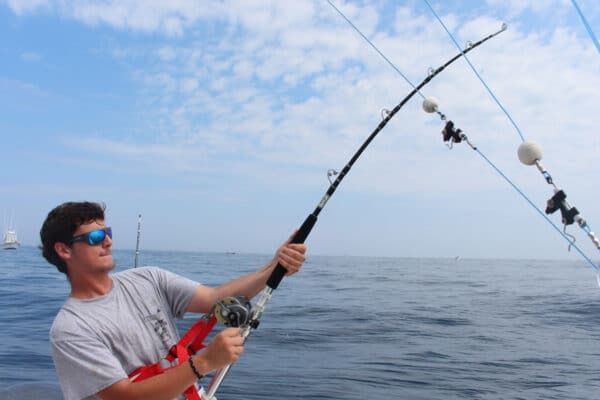
Whether you choose a diving plug, use sash weights and wire line on a broomstick-like rod, or pull a Z-Wing, make sure that something in your spread gets down well below the other offerings. Wahoo are known to hunt on the deeper side and will often cruise 20-plus feet beneath the surface—and all of your baits.
Which of these techniques will work best depends on how fast you’ll be trolling. Plugs are generally rated for use up to a specific speed and are useless (and dangerous) to pull beyond that. Weight, wire, and broomsticks can work at just about any speed and can be used for high-speed trolling. And Z-Wings are excellent for slow speeds up to seven or so mph, but go any faster and stuff can start breaking or get damaged by all the tension they create. All work, so choose whichever will work best with your game plan and get one or two of those baits running deep.
2. Do a deep-dive on the SST charts at SatFish before leaving the dock.
Wahoo are a bit choosier than most other species, and while you could encounter them in water temperatures ranging from the upper 60s to the lower 80s, they spend most of their time in water that’s in the mid- to upper-70s. Anywhere you encounter a one- to three-degree break in this temperature zone is a seriously good bet.
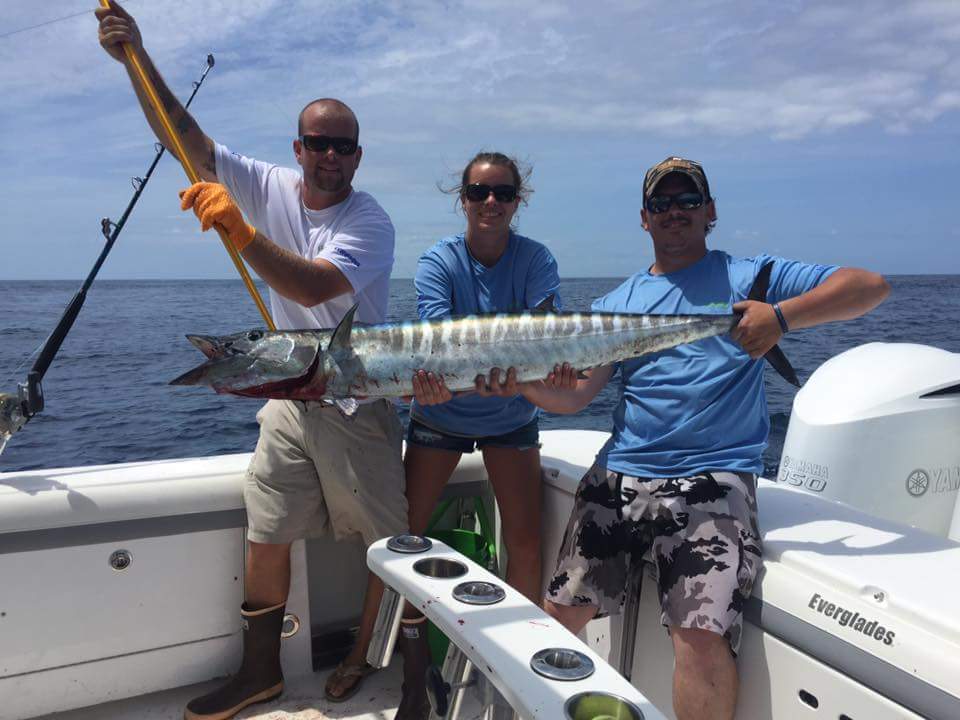
Remember that surface temperature is not necessarily the same as water temps at lower depths—which is one of the reasons those deep lines work so well so often. If surface temps are in the mid-80s, that doesn’t mean no wahoo are around. It just means there’s a good chance any in the vicinity are down deep simply because they find the temperature more comfortable there.
While temp breaks are a major wahoo-attractor, don’t sell structure short. Shelves and ledges, aggregated weeds, and flotsam can all attract these fish. Another way you can sometimes make a bonus wahoo catch is by keeping a bailing rig tipped with wire leader handy when you’re targeting mahi-mahi. Try bailing long enough and sooner or later you’ll look over the side and see a wahoo go darting past—get the other lines out of the water and bait up the wire rig asap.
3. Adjust Your Offerings
Wahoo will hit all of the usual stuff but if you select a few special offerings you’ll have a better shot at them. The species is partial to dark colors like purple/blacks or red/blacks, and while they’ll bite those bright pinks, greens, and whites, they’ll often bite better with some dark stuff in the mix. Naturally, dark skirts fished with ballyhoo must be rigged on wire leaders to prevent bite-offs. Otherwise, you’ll be bitten off four times out of five. At least.
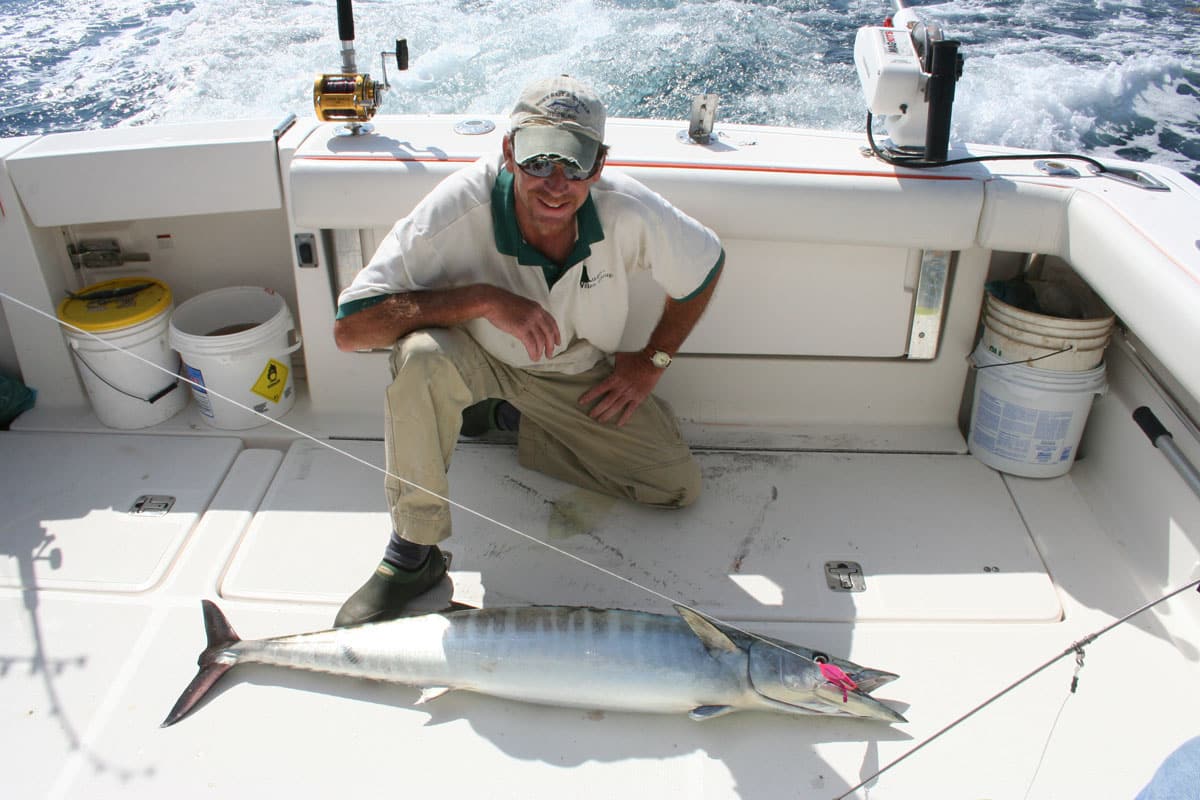
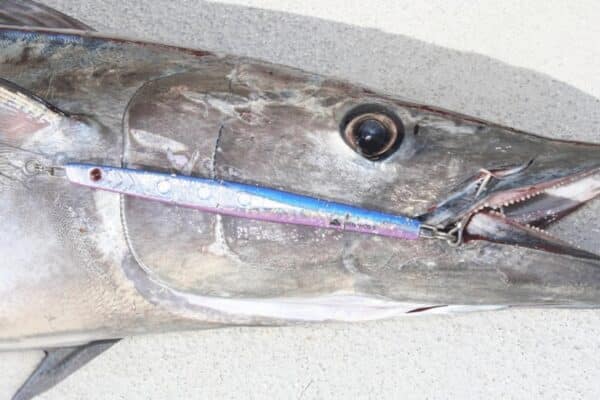
Spoons are another excellent pick for your dedicated wahoo baits. Although spoons are shiny, again, adding dark shades is a good move. A silver spoon with deep red or purple prismatic tape, for example, can be a killer. Added bonus: spoons give you some inherent tooth-proofing, so you don’t have to worry about adding more than a trace of wire.
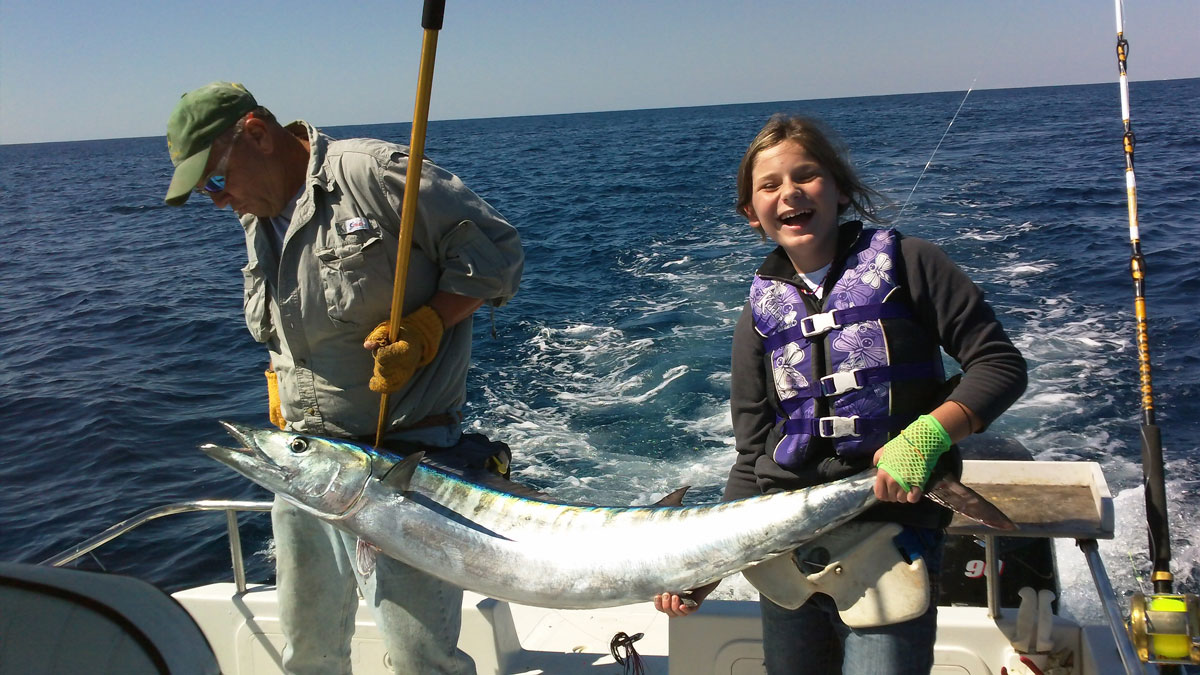
Getting a fish on the line is, of course, only half the battle, because these fish can be exceptionally tough to land. Using a small-gap gaff will help a lot and never swing it in front of the line, because wahoo have a habit of darting forward at the very last minute. But if you sink the gaff and get that toothy critter on ice, you’ll be darn glad you adjusted your tactics to waylay those wahoo.