As the water cools off, striped bass start feeding—and this is usually the peak bite of the year.
Fall striped bass fishing is as good as it gets, with schools of stripers chewing frantically on menhaden as they try to fatten up for winter. Still, thanks to changing weather, tides, and the mysterious inner workings of those finicky fish brains, getting stripers on the line can prove challenging some days. Apply these 10 top tips, however, and we bet you’ll be battling those bass in no time.
1. Get a pair of gyro-binos. Regular marine binoculars generally magnify your view up to seven times and no higher, because if they magnify any further, the motion of a pitching deck makes it impossible to focus on anything. With stabilization, however, you can enjoy twice the magnification or even more. The net result? Instead of seeing birds at a fraction of a mile (with the bare eye) or a couple-few miles (with regular binoculars), you can see them out to seven or eight miles, depending on the conditions.
2. Dress up the jigs. It isn’t only the stripers fattening up at this time of year; the baits they’re chasing are becoming more rotund as well. This is when wider profiles make a difference, and adding a skirt to a jig or putting a tail on a bucktail will often outperform casting a slim-profile bait.
3. When fishing structure, zoom in farther on your chartplotter. As in, zoom all the way. That little boat icon on the screen would be microscopic if it were to scale. So when you’re looking at a zoomed-out view, it can appear as though you’re directly above that wreck or reef, when in actuality you’re hundreds of feet off-target. Zoom all the way in, and you can see where the boat is with far better precision.
4. Pay attention to gulls and ignore the terns. Larger seagulls can handle menhaden, but smaller terns have trouble with them. As often as not, if you spot a flock of terns, they’ll be focused on smaller baits, like bay anchovies—which those feasting stripers aren’t nearly as interested in. Spot a flock of gulls, on the other hand, and there’s a much better chance of rockfish being nearby.
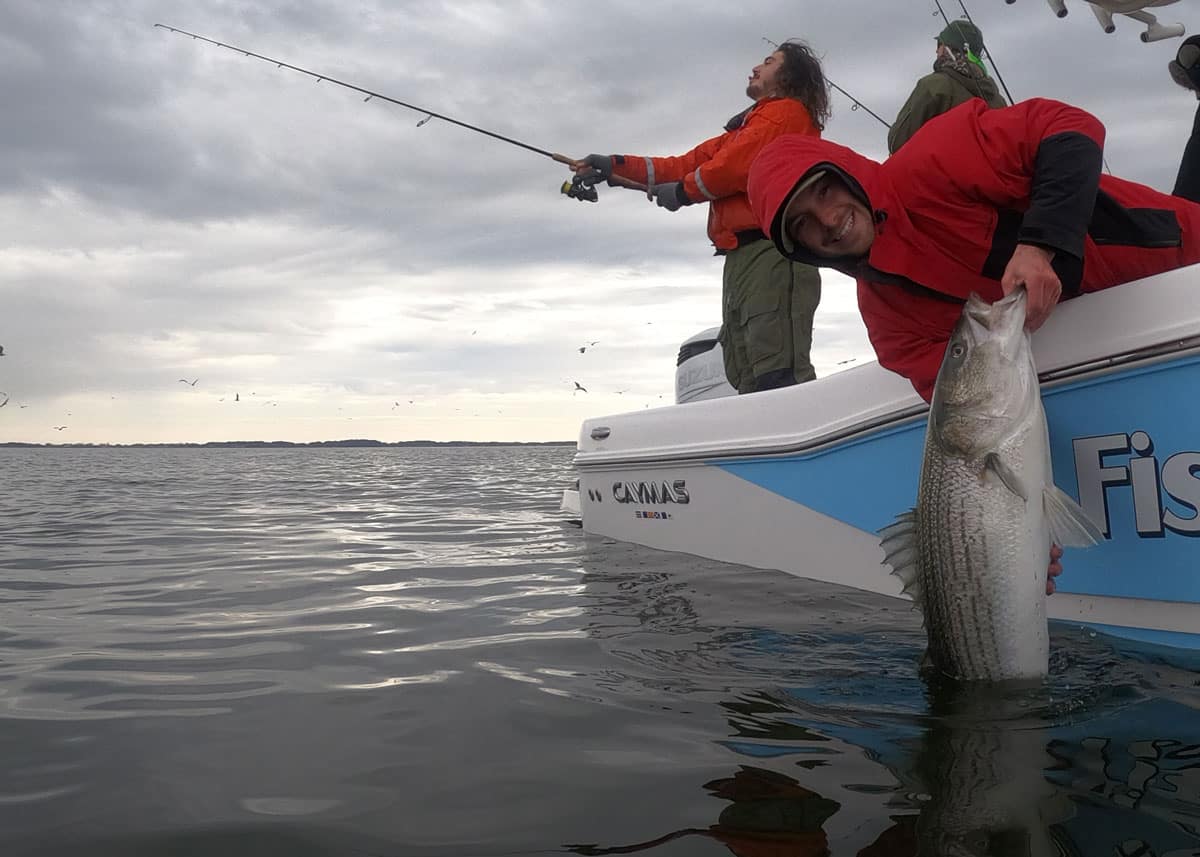
5. Fish under breaking fish. If that is, you want to catch the biggest fish around. When fish are busting on the surface, yeah, you’ll usually hook up fast if you retrieve high in the water column. But the larger fish often position themselves just below and on the periphery of the action where they can lazily pick off injured baitfish. Cast to the edges of the school and let that lure sink to hook up with the big boys.
6. Troll cross-current as opposed to going with or against the current. Going cross-current, you can get a much more accurate read on your speed through the water, set it to get the best action from your lures, and put those lures at a consistent depth. Going with or against the current can be deceiving and may require constant attention to keep the boat moving at just the right pace. If you’re forced to go with or against the current and you don’t have an accurate gauge on speed through the water, ignore that GPS speed (which is speed over ground and could be way, way off for judging speed through water). Instead, hold the lures next to the boat and watch how they swim as you set your speed.
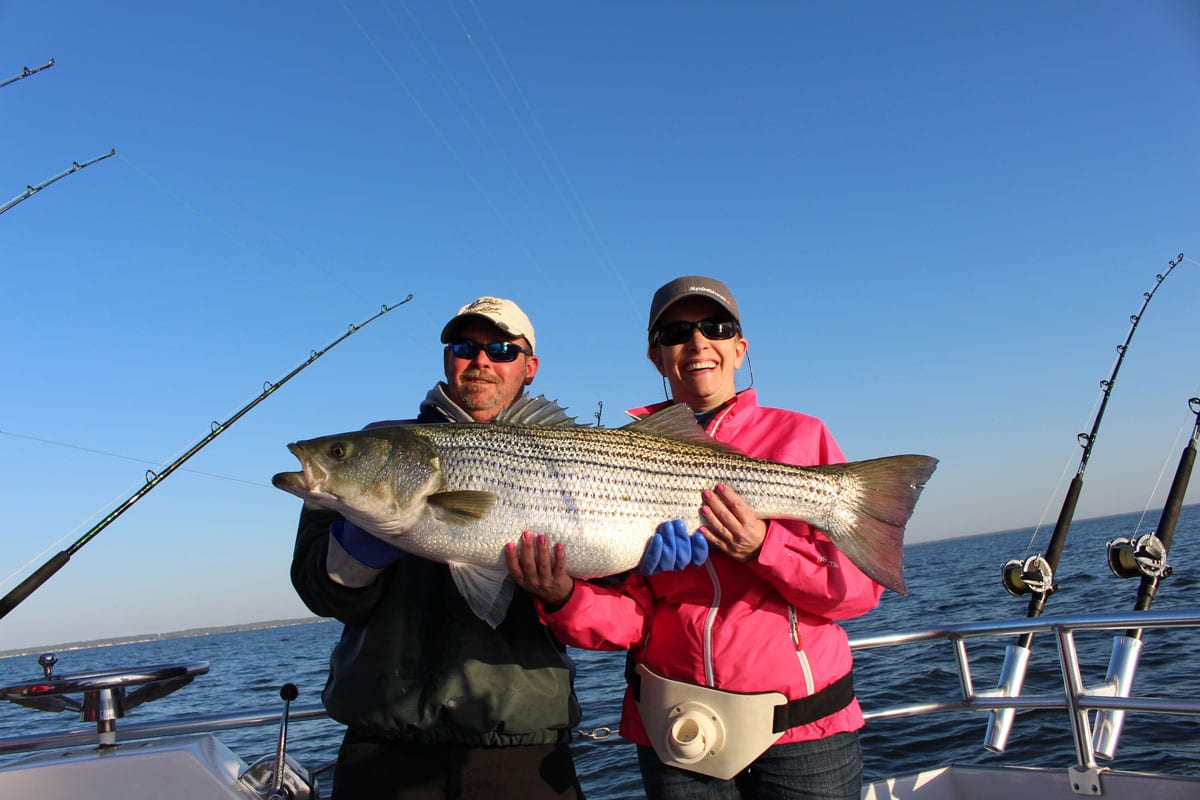
7. As it gets colder and colder, upsize your offerings more and more. The chillier the water becomes, the less fish are willing to expend energy. They want a bigger bang for the buck, and may not bother with chasing a four- or five-inch bait that provides little caloric value. A seven- to 10-inch bait and the heftier meal it provides, however, can prove far more tempting.
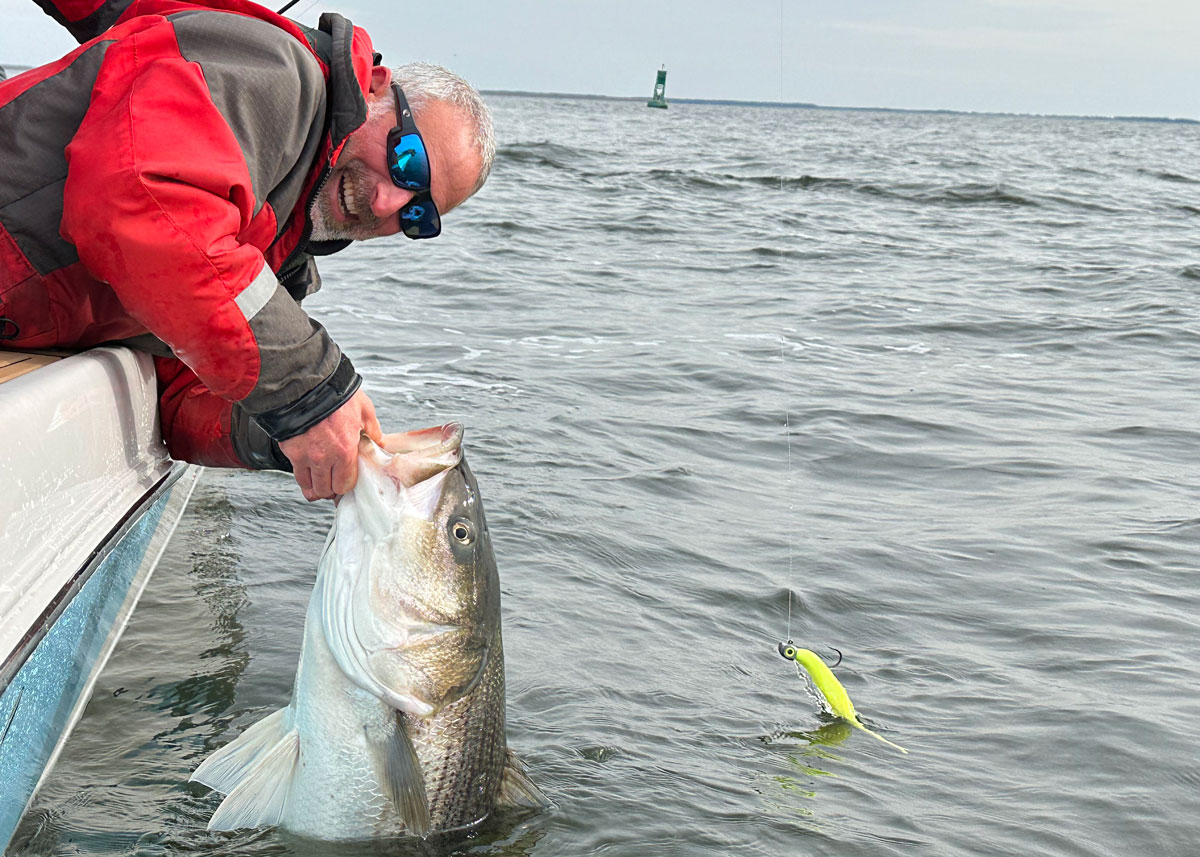
8. Don’t be afraid to go shallow, especially when you aren’t finding the fish out deep. (Naturally, this tip applies to bay anglers, not those hunting in the open ocean). On bright sunny days, stripers will often move shallow, particularly late in the afternoon, over dark bottom where the sun has been hitting all day. When water temps are nearing the point where striped bass start feeling lethargic, they’ll seek out these areas, where water temps are often a couple degrees higher than surrounding areas or deeper zones.
9. When approaching fish, never shift your boat into reverse. Shifting an outboard engine from neutral to reverse makes an epic metal-on-metal “clunk” that can shut down a bite just as fast or even faster than driving right through the school (also a bad move, of course). You need to plan your approach so you can drift into casting position in neutral, without going back into gear. What about shutting down the motor? If you have a four-stroke, it’s no big deal; they make just as little noise below the water’s surface as they do above it. But if you have a two-stroke, it’s critical to shut down because they make a ton of banging and clanging when they idle in neutral.
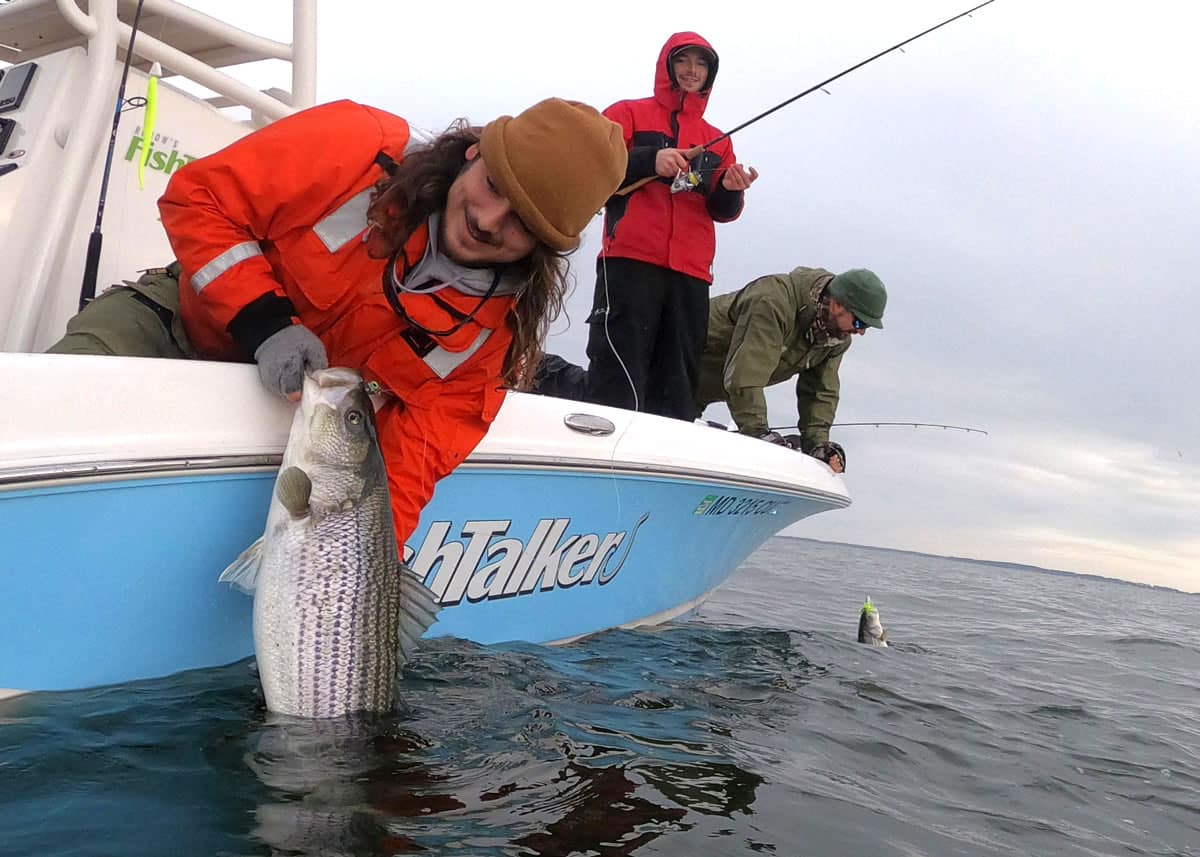
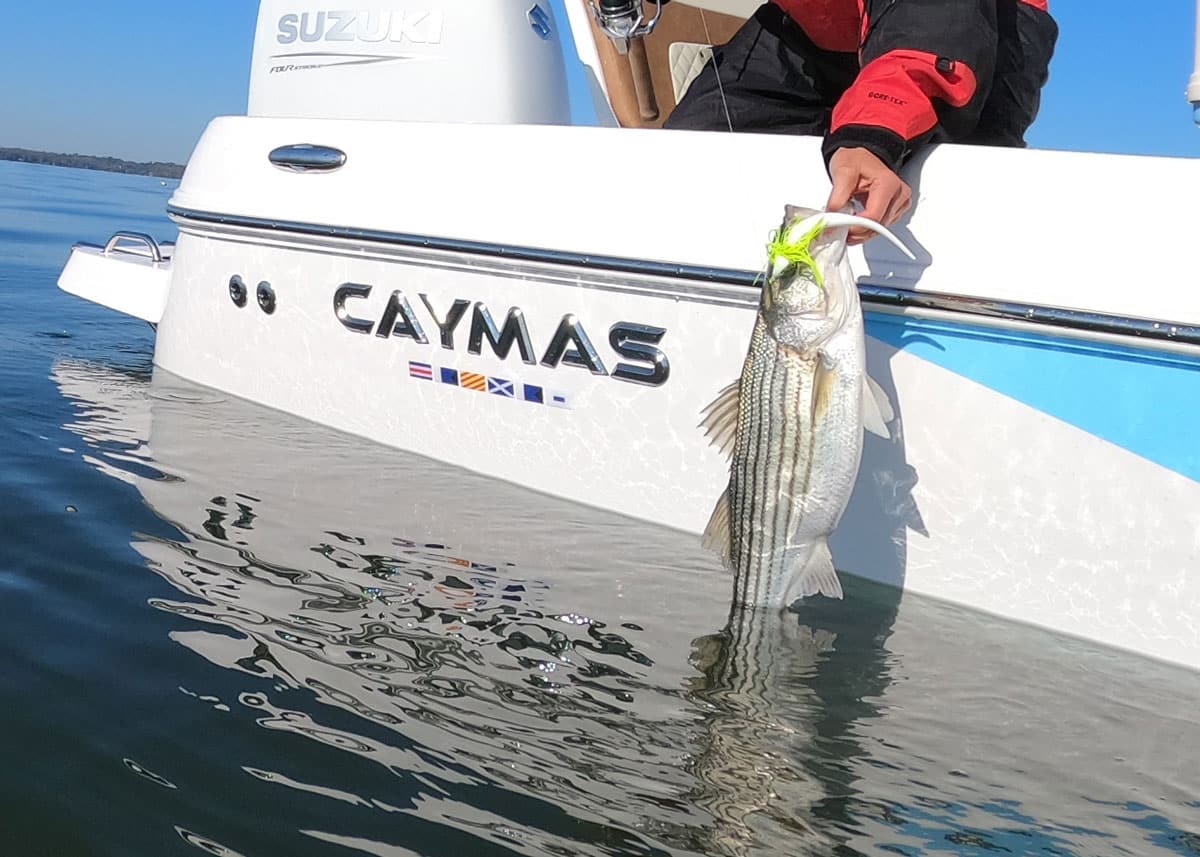
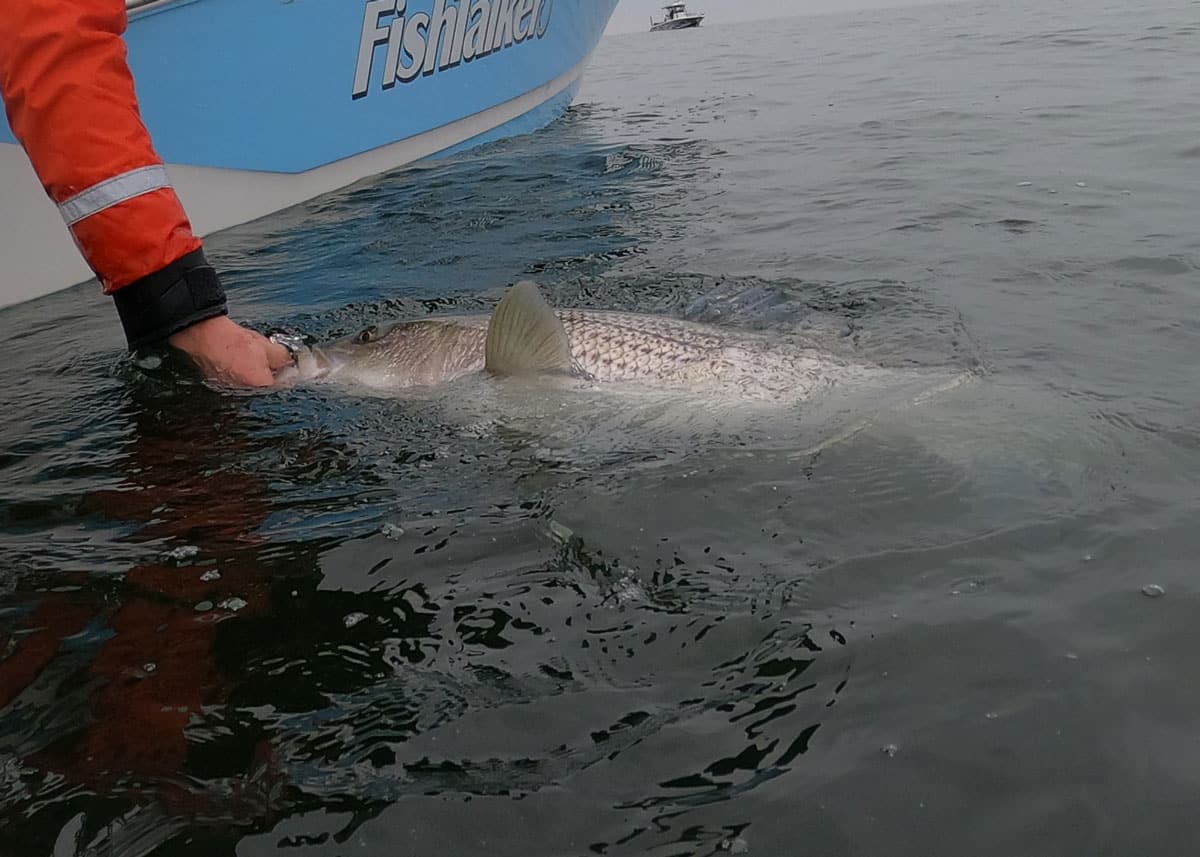
10. Use best catch-and-release practices, period. Striped bass stocks aren’t what they used to be, and with narrow slots and low bag limits we’ll all be releasing most of the fish we handle. So, we all need to be responsible: switch out treble hooks for singles, don’t give long eat-times when fishing bait, wet your hands before handling fish, remove the hook without removing the fish from the water whenever possible, and when you do hold one up for a photo, keep it horizontal with one hand in the jaw and the other supporting the fish amidships.
Okay: ready to get after those fall stripers? We thought so—this is one of the most popular sportfish around, and fall is often the best time to get after ‘em.